Ritucharya, living by the seasons
Ayurveda divides the year into six seasons of two months and changes food, sleep and exercise with each. Here is the calendar, the reasoning behind it, and how to use it sensibly.
The short answer
Ritucharya is Ayurveda's seasonal routine. The year is divided into six seasons (ritus) of about two months: late winter, spring, summer, monsoon, autumn and early winter. Each is said to build up or provoke a particular dosha, and the texts change food, exercise, sleep and clothing to match. Strength and digestion are held to be highest in winter and lowest in summer and the monsoon. The rules have not been tested as a whole, but many overlap with common sense about heat, food safety in the rains and staying active in winter.
In this guide
The year in two halves
The classical texts split the year by the sun's path. In the northward half (uttarayana or adana kala, roughly mid-January to mid-July), the sun and wind grow stronger and are said to draw strength out of people and plants. In the southward half (dakshinayana or visarga kala, mid-July to mid-January), the moon, rain and cool give strength back. So the body is described as weakest in summer and the monsoon, and strongest in early and late winter.
The six seasons of ritucharya
| Ritu | When | What happens | Traditional advice |
|---|---|---|---|
| Shishira Late winter | mid-January to mid-March | Cold and dry; strength still high, kapha building up | Warm, nourishing food; oil massage; avoid cold, dry and light food. |
| Vasanta Spring | mid-March to mid-May | Kapha melts and rises: colds, congestion, sluggishness | Lighter food, barley and honey, exercise, no daytime sleep. |
| Grishma Summer | mid-May to mid-July | Heat saps strength; vata builds up | Sweet, cool, liquid food; rest in the heat; avoid hard exercise and alcohol. |
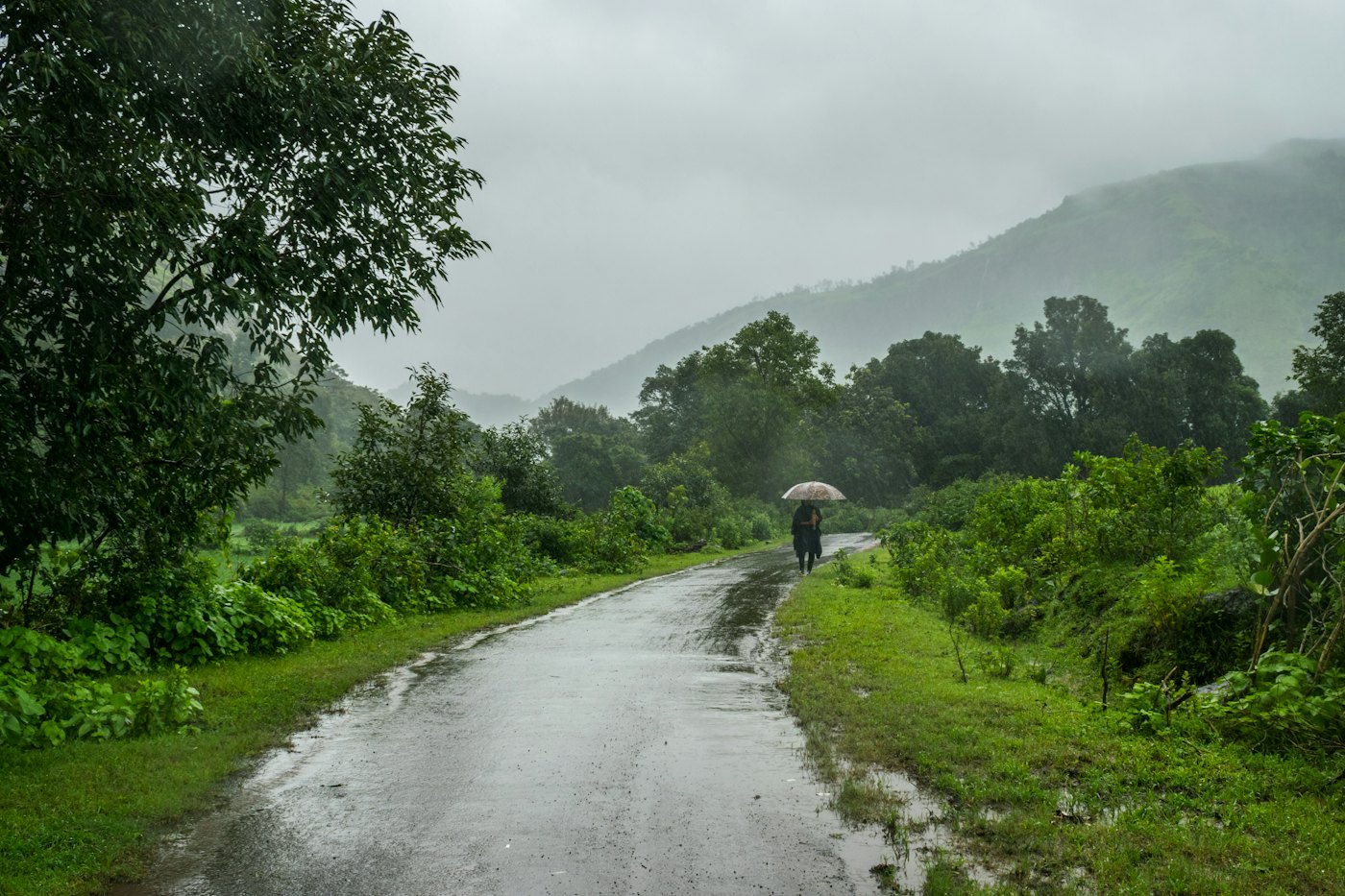
| Varsha Monsoon | mid-July to mid-September | Weak digestion; vata aggravated, pitta building up | Light, freshly cooked food; boiled water; avoid damp and day sleep. |
| Sharad Autumn | mid-September to mid-November | Sun after rain: pitta aggravated | Sweet, bitter and cooling food, ghee; avoid strong sun and heavy, sour food. |
| Hemanta Early winter | mid-November to mid-January | Cold; digestion strongest of the year | Nourishing food in good quantity, oil massage, exercise, warm clothes. |
How the doshas move through the year

Each dosha is described as accumulating in one season, flaring in the next and settling in the third. Kapha accumulates in late winter and flares in spring, which the texts link to spring colds and congestion. Vata accumulates in the dry heat of summer and flares in the monsoon, with its joint pains and weak digestion. Pitta accumulates in the monsoon and flares in the sharp sun of autumn, with rashes, acidity and irritability. The seasonal cleansing therapies of panchakarma were timed to these flare-ups.
Living by the season keeps the doshas from building up: eat and act against the season's qualities, and the body stays in balance. Change habits gradually, over the fortnight where two seasons meet.
Seasonal patterns in health are real: heat illness and dehydration in summer, water- and food-borne infections in the monsoon, respiratory infections and lower vitamin D in winter. The specific Ayurvedic rules have not been tested as a system, and the dosha explanations are traditional, not physiological. The practical advice that matches public-health guidance, such as boiled water in the rains and staying cool in the heat, is the part to rely on.
Ritu sandhi: changing over
The fortnight where two seasons meet, the last week of one and the first of the next, is called ritu sandhi. The texts advise dropping the old season's habits and taking up the new ones gradually over these days rather than overnight. It is the same idea as easing into a change of diet or exercise, and it is easy to follow.
Using it where you live
The six seasons describe the plains of northern India. Kerala gets two monsoons; Mumbai has almost no winter; the hills have a long one; and people living abroad have their own calendar. Apply the principle rather than the dates: notice when it is hot and dry, wet and humid, or cold, and adjust food, activity and sleep to that. Our guide to Ayurvedic eating explains the tastes and qualities behind the advice, and the three doshas explains the terms.
No seasonal routine replaces medical care. Heat stroke, dengue, typhoid and diarrhoeal illness in the monsoon need a doctor, not a change of diet.
Questions readers ask
What are the six seasons in Ayurveda?
Shishira (late winter), Vasanta (spring), Grishma (summer), Varsha (monsoon), Sharad (autumn) and Hemanta (early winter), each about two months long.
What should I eat in the monsoon according to Ayurveda?
Light, freshly cooked, warm food, boiled water and easily digested grains, avoiding heavy, stale and raw street food. Much of this matches modern food-safety advice for the rains.
What is ritu sandhi?
The fortnight where two seasons meet. The texts advise changing habits gradually over these days rather than all at once.
Does ritucharya apply outside India?
The dates do not, but the principle can: adjust food, activity and sleep to whether your weather is hot, wet or cold.
Sources
- Charaka Samhita, Sutrasthana chapter 6 (Tasyashitiya, on seasonal regimen)
- Vagbhata, Ashtanga Hridaya, Sutrasthana chapter 3 (Ritucharya)
- Thakkar J, Chaudhari S, Sarkar PK. Ritucharya: answer to the lifestyle disorders. Ayu, 2011
- NCCIH: Ayurvedic Medicine, In Depth
A note on health. This guide explains a tradition. It is not medical advice, and nothing in it is a treatment for any disease. See a qualified doctor for symptoms, and do not stop or change a prescribed medicine on the strength of anything you read here. Full medical disclaimer.