Panchakarma, explained
Panchakarma is Ayurveda's intensive cleansing programme, now sold everywhere from hospitals to spas. Here is what the classical version involves, its risks, and how to choose a centre.
The short answer
Panchakarma (“five actions”) is Ayurveda's intensive cleansing programme. The five procedures in the Charaka Samhita are therapeutic vomiting (vamana), purgation (virechana), two kinds of medicated enema (basti) and nasal medication (nasya). They are preceded by days of internal and external oiling and steam, and followed by a graded diet. A classical course takes one to four weeks under a qualified doctor. There are few rigorous trials of panchakarma, and the procedures carry real risks such as dehydration, so it is not for everyone and not a do-it-yourself detox.
In this guide
The five actions of panchakarma
| Procedure | What it is | Traditionally for |
|---|---|---|
| Vamana | Induced vomiting after preparation | Kapha disorders |
| Virechana | Purgation with herbal laxatives | Pitta disorders |
| Niruha basti | Enema of herbal decoction | Vata disorders |
| Anuvasana basti | Enema of medicated oil | Vata disorders |
| Nasya | Medicated oil or powder through the nose | Head, neck and sinus conditions |
The Sushruta Samhita counts the two enemas as one and adds bloodletting (raktamokshana) as the fifth. Not everyone has all five: the doctor chooses one or two to suit the person and the season.
The three phases
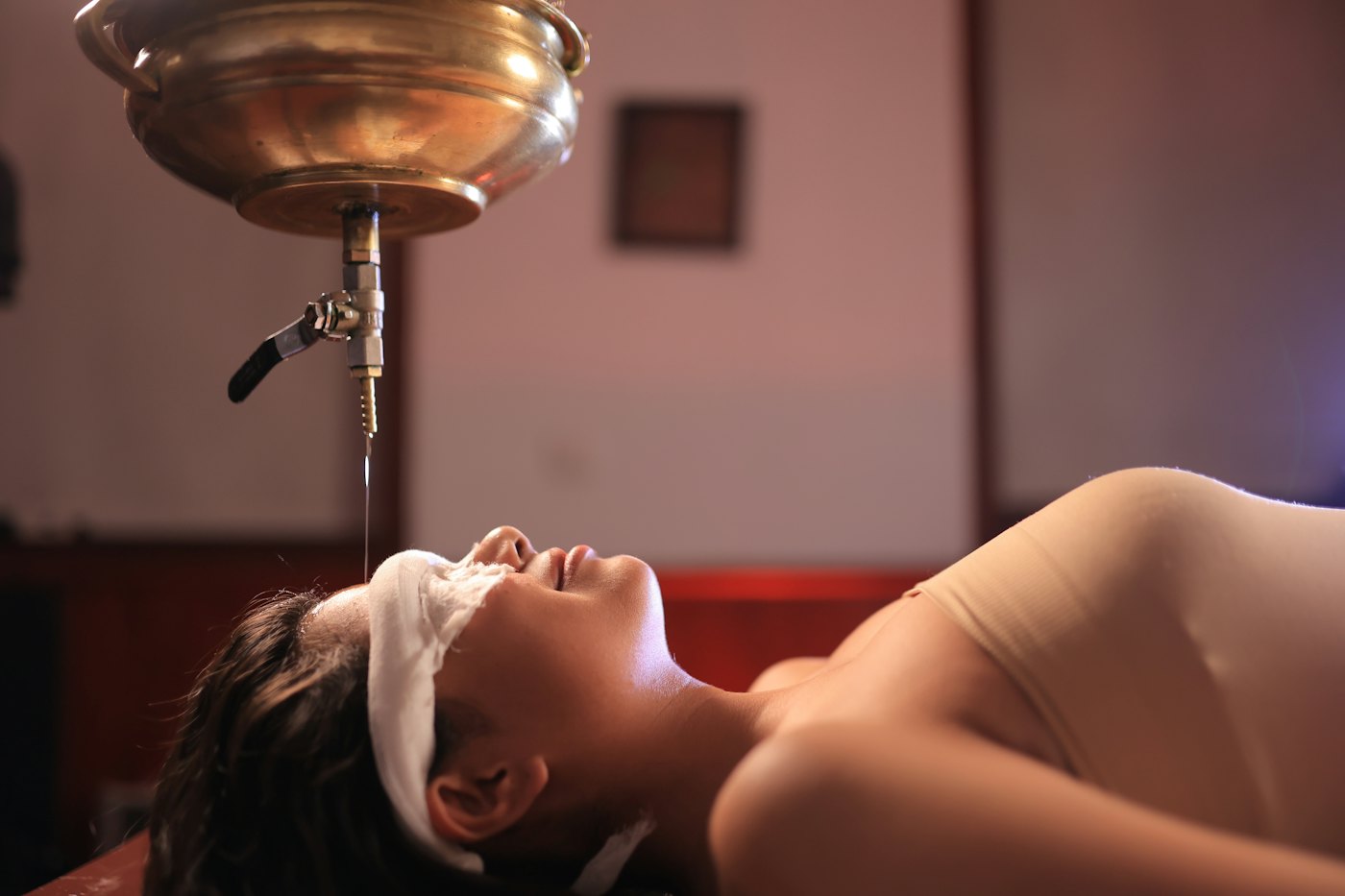
- Preparation (purvakarma). Several days of drinking increasing amounts of medicated ghee (snehapana), daily oil massage (abhyanga) and herbal steam (swedana). The aim, in the tradition's terms, is to loosen accumulated doshas and draw them towards the gut.
- The main procedure (pradhanakarma). The chosen therapy, often on a single day, as with vamana or virechana, or as a series, as with basti.
- Recovery (paschatkarma). A graded diet (samsarjana krama) that starts with thin rice gruel and builds back to normal food over several days, followed by rasayana to rebuild strength.
Panchakarma removes doshas and ama at the root rather than only calming them, and should be done in the right season, by a trained physician, with careful preparation and recovery.
There are few rigorous trials. Small studies, including a 2009 pilot in the United States, report better quality-of-life scores after a programme, but without comparison groups it is hard to separate the effect of rest, diet and a retreat setting. There is no evidence that panchakarma removes “toxins” in any measurable sense, and induced vomiting and purgation carry medical risks.
Risks and who should not have it
- Dehydration and salt imbalance from vomiting, purgation or repeated enemas, which can be dangerous for older people and those with heart or kidney disease.
- Large amounts of ghee in preparation can upset digestion and raise blood fats.
- Not suitable in pregnancy, for young children (for vamana and virechana), for frail or very old people, or with serious heart disease, uncontrolled diabetes, recent heart attack or stroke, active bleeding or bowel disease, unless your own doctor agrees.
- Medicines: tell the Ayurvedic doctor about every medicine you take, and do not stop prescribed medicines for the programme.
Choosing a centre
“Panchakarma” on a spa menu is often just massage and steam. For the classical therapies:
- Look for a doctor with a BAMS or MD (Ayurveda) degree, registered with a state board under the National Commission for Indian System of Medicine (NCISM).
- Prefer a hospital or centre with NABH accreditation for AYUSH hospitals, which checks safety and record-keeping.
- Expect a medical history, an examination and, for older people, basic tests before you start.
- Ask in writing which procedures are planned, why, for how many days, and the full cost.
- Be wary of any centre that promises to cure diabetes, cancer, infertility or other diseases.
Related: abhyanga and shirodhara, the seasons and safety of Ayurvedic medicines.
Questions readers ask
What are the five procedures of panchakarma?
In the Charaka Samhita: vamana (therapeutic vomiting), virechana (purgation), niruha basti (decoction enema), anuvasana basti (oil enema) and nasya (nasal medication). Sushruta counts the enemas as one and adds bloodletting.
How long does panchakarma take?
A classical course takes one to four weeks, including preparation and recovery. Short spa packages are usually massage and steam only.
Is panchakarma a detox?
Ayurveda describes it as removing accumulated doshas and ama. There is no evidence that it removes toxins in any measurable sense.
Is panchakarma safe?
It carries real risks, such as dehydration and salt imbalance, and is unsuitable in pregnancy and for many people with heart, kidney or bowel disease. Have it only under a qualified, registered doctor.
Who can perform panchakarma in India?
A doctor with a BAMS or MD (Ayurveda) degree registered with a state board under NCISM, with trained therapists.
Sources
- Charaka Samhita, Siddhisthana (on the five purificatory procedures)
- Sushruta Samhita, Sutrasthana and Chikitsasthana (on raktamokshana and basti)
- Conboy LA, Edshteyn I, Garivaltis H. Ayurveda and Panchakarma: measuring the effects of a holistic health intervention. The Scientific World Journal, 2009
- National Commission for Indian System of Medicine (NCISM)
- NABH: Accreditation standards for AYUSH hospitals
- NCCIH: Ayurvedic Medicine, In Depth
A note on health. This guide explains a tradition. It is not medical advice, and nothing in it is a treatment for any disease. See a qualified doctor for symptoms, and do not stop or change a prescribed medicine on the strength of anything you read here. Full medical disclaimer.