The Ayurvedic diet
Ayurveda cares as much about how and when you eat as about what. Here are the classical rules of a meal, the six tastes and incompatible foods, set beside what nutrition science says.
The short answer
The Ayurvedic diet judges food less by nutrients than by digestion. It asks you to eat when hungry and the last meal is digested, food that is warm, fresh and a little oily, in the right quantity, slowly and with attention, with all six tastes (sweet, sour, salty, pungent, bitter, astringent) over the day. It warns against “incompatible” combinations such as milk with fish. Several of these habits, such as regular meals, eating slowly and stopping before you are full, fit modern nutrition advice; others, including most incompatibility rules, have little evidence either way.
In this guide
Agni comes first
In Ayurveda the same meal can nourish one person and burden another, depending on their agni, the digestive fire. Strong, steady agni turns food into healthy tissue; weak or erratic agni leaves ama, a sticky residue blamed for many problems. So the first question is not “is this food healthy?” but “can I digest it now?”. That is why the texts tie diet to season, time of day and the individual's constitution (prakriti).
The six tastes of the Ayurvedic diet
Every food is classed by its tastes (rasa), each made of two of the five elements and each raising or calming particular doshas. A balanced day includes all six.
| Taste | Everyday examples | Said to calm | Said to raise |
|---|---|---|---|
| Sweet (madhura) | Rice, wheat, milk, ghee, dates | Vata, pitta | Kapha |
| Sour (amla) | Curd, lemon, tamarind, amla | Vata | Pitta, kapha |
| Salty (lavana) | Rock salt, sea salt | Vata | Pitta, kapha |
| Pungent (katu) | Ginger, pepper, chilli, mustard | Kapha | Vata, pitta |
| Bitter (tikta) | Karela, methi, neem, turmeric | Pitta, kapha | Vata |
| Astringent (kashaya) | Moong and other dals, pomegranate, raw banana | Pitta, kapha | Vata |
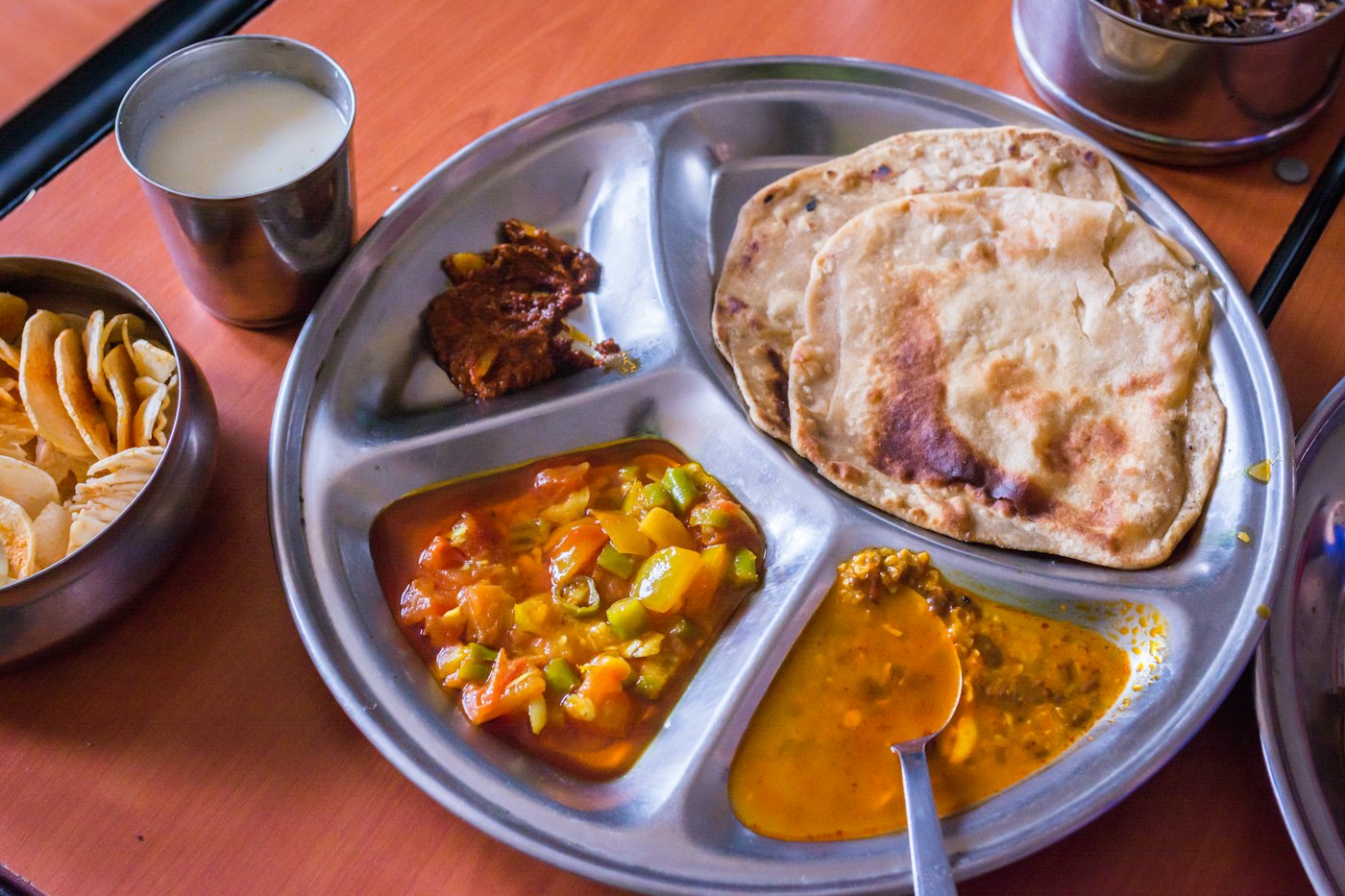
A traditional Indian thali, with its grain, dal, vegetables, curd, pickle and a bitter or astringent side, already covers most of them.
The rules of a meal
The Charaka Samhita (Vimanasthana, chapter 1) sets out how to eat. In plain words:
- Eat warm food.
- Eat food with a little fat or oil in it.
- Eat the right quantity: the texts suggest filling the stomach a third with food, a third with liquid, and leaving a third empty.
- Eat only when the previous meal has been digested.
- Avoid combinations that work against each other.
- Eat in a pleasant place, with what you need at hand.
- Do not eat too fast.
- Do not eat too slowly.
- Do not talk or laugh while eating; give the meal your attention.
- Consider what suits you, and eat with that in mind.
Eating well is a discipline of timing, quantity and attention as much as of choosing foods. The main meal belongs at midday, when agni is strongest, and supper should be lighter and early.
Regular meals, eating slowly, stopping before you are full and plenty of whole grains, pulses and vegetables all fit modern nutrition advice. Studies link eating fast with higher weight, and late heavy meals with worse sleep and reflux. Dosha-based diets have very little trial evidence, and there is no test that reliably measures agni or ama.
Incompatible foods (viruddha ahara)
The texts list combinations to avoid, such as milk with fish, milk with sour fruit, heated honey, and equal weights of honey and ghee. They explain them as foods whose qualities clash. There is little modern evidence that these combinations cause harm, and many traditional Indian dishes combine milk and fruit. If a combination disagrees with you, avoid it; otherwise treat these as cultural rules rather than safety warnings.
A simple start
- Make lunch the main meal, and eat supper earlier and lighter.
- Sit down to eat, without a screen, and eat slowly.
- Include a bitter or astringent food most days: methi, karela, dal or greens.
- Try a bowl of khichdi, rice and moong dal cooked with ghee, cumin and ginger, on a day when your digestion feels off. It is the classic light meal.
Anyone with diabetes, kidney disease, food allergies or an eating disorder, or who is pregnant, should plan diet changes with a doctor or registered dietitian. See also eating with the seasons and the three doshas.
Questions readers ask
What are the six tastes in Ayurveda?
Sweet, sour, salty, pungent, bitter and astringent. Ayurveda advises including all six over the day.
What does Ayurveda say about when to eat?
Eat the main meal at midday, when digestion is strongest, eat supper lighter and earlier, and eat only when the previous meal has been digested.
Is it really harmful to have milk with fish?
Ayurveda lists it as incompatible, but there is little modern evidence of harm. Treat it as a traditional rule rather than a safety warning.
Is there an Ayurvedic diet for my dosha?
Ayurveda suggests foods by constitution, but dosha diets have very little trial evidence. The general habits, such as regular, slow, moderate meals, are the well-supported part.
What is khichdi and why is it used in Ayurveda?
Rice and moong dal cooked together with ghee and mild spices. It is easy to digest and is the classic light meal when digestion is weak.
Sources
- Charaka Samhita, Vimanasthana chapters 1 and 2 (rules of eating and quantity of food)
- Charaka Samhita, Sutrasthana chapter 26 (tastes and incompatible foods)
- Vagbhata, Ashtanga Hridaya, Sutrasthana. Classical text, c. 7th century CE
- Indian Council of Medical Research, National Institute of Nutrition. Dietary Guidelines for Indians, 2024
- NCCIH: Ayurvedic Medicine, In Depth
A note on health. This guide explains a tradition. It is not medical advice, and nothing in it is a treatment for any disease. See a qualified doctor for symptoms, and do not stop or change a prescribed medicine on the strength of anything you read here. Full medical disclaimer.