Sanskrit glossary
110 words used across AYU4, from agni to yoga nidra, each with its Devanagari spelling and one plain definition.
Ayurveda
- Abhyangaअभ्यंग
- A full-body massage with warm oil, part of the daily routine.
- Adana kalaआदान काल
- The 'taking' half of the year, from late winter to summer, when the sun is said to draw strength from people. See also visarga kala.
- Agniअग्नि
- The digestive fire: the power that turns food into tissue. Weak agni is the root of many problems in the classical texts.
- Amaआम
- Undigested, sticky residue said to build up when agni is weak, and to block the body's channels.
- Amalakiआमलकी
- Amla, Indian gooseberry (Phyllanthus emblica): a sour fruit, one of the three fruits of triphala and a classic rasayana.
- Ashwagandhaअश्वगंधा
- Withania somnifera, a root used as a rasayana. The name means 'smell of a horse', after the smell of the fresh root.
- Ayurvedaआयुर्वेद
- 'Knowledge of life': the classical system of health of the Indian subcontinent.
- BAMSबी.ए.एम.एस.
- Bachelor of Ayurvedic Medicine and Surgery, the five-and-a-half-year degree for Ayurvedic doctors in India.
- Bastiबस्ति
- A medicated enema of oil or decoction, one of the five actions of panchakarma; given only under supervision.
- Bhasmaभस्म
- A preparation of metals or minerals made by repeated heating, used in rasa shastra. Some contain mercury, lead or arsenic.
- Bibhitakiबिभीतकी
- Baheda (Terminalia bellirica), one of the three fruits of triphala.
- Brahma muhurtaब्रह्म मुहूर्त
- The hour and a half before sunrise, advised in the texts as the time to wake.
- Churnaचूर्ण
- A fine herbal powder, such as triphala churna.
- Dakshinayanaदक्षिणायन
- The sun's southward course, from the summer to the winter solstice; the half of the year that coincides with visarga kala.
- Dhatuधातु
- One of the seven body tissues: plasma, blood, muscle, fat, bone, marrow and reproductive tissue.
- Dinacharyaदिनचर्या
- The daily routine, from waking before sunrise to the timing of meals and sleep.
- Doshaदोष
- One of the three working principles of the body (vata, pitta, kapha). Literally 'that which can go wrong'.
- Gandushaगण्डूष
- Holding or swishing oil or a liquid in the mouth; the basis of oil pulling.
- Haridraहरिद्रा
- Turmeric (Curcuma longa), haldi in Hindi.
- Haritakiहरीतकी
- Harad (Terminalia chebula), one of the three fruits of triphala; praised in the texts as a great medicine.
- Kadhaकाढ़ा
- The everyday Hindi word for a herbal decoction, such as one made with tulsi, ginger and pepper.
- Kaphaकफ
- The dosha of structure and cohesion, made of water and earth: heavy, cool, oily and stable.
- Kashayaकषाय
- A herbal decoction, boiled down in water. Also the astringent taste.
- Kavalaकवल
- Swishing a liquid round the mouth and spitting it out. Gandusha is holding it still; kavala is moving it.
- Mala (waste)मल
- The body's wastes: urine, stool and sweat. (Not the same word in use as the prayer-bead mala.)
- Nasyaनस्य
- Putting medicated oil or drops into the nose; a daily practice in small amounts and one of the actions of panchakarma.
- Pancha mahabhutaपञ्च महाभूत
- The five great elements: space, air, fire, water and earth.
- Panchakarmaपञ्चकर्म
- The 'five actions': an intensive, supervised cleansing course of emesis, purgation, enemas, nasal treatment and bloodletting.
- Pittaपित्त
- The dosha of transformation and heat, made of fire and water: hot, sharp and slightly oily.
- Prakritiप्रकृति
- Your inborn mix of the three doshas, said to be fixed at conception.
- Pramehaप्रमेह
- A classical group of urinary disorders that includes what is now called diabetes (madhumeha).
- Raktamokshanaरक्तमोक्षण
- Bloodletting, including by leeches; the fifth action of panchakarma in some lists.
- Rasaरस
- Taste. Ayurveda names six: sweet, sour, salty, pungent, bitter and astringent. Also the first tissue, plasma.
- Rasa shastraरसशास्त्र
- The branch of Ayurveda that makes medicines from metals and minerals, including mercury.
- Rasayanaरसायन
- Rejuvenation: herbs and practices meant to build strength and slow ageing, such as ashwagandha.
- Ritu sandhiऋतु संधि
- The junction of two seasons, about two weeks either side, when habits are to be changed gradually.
- Ritucharyaऋतुचर्या
- The seasonal routine, adjusting food and habits through the six Indian seasons.
- Samsarjana kramaसंसर्जन क्रम
- The graded diet after panchakarma, from thin rice water back to normal meals over several days.
- Shirodharaशिरोधारा
- A therapy in which warm oil is poured in a steady stream over the forehead.
- Snehanaस्नेहन
- Oiling, inside (drinking ghee, snehapana) or outside (massage); the preparation for panchakarma.
- Swedanaस्वेदन
- Sweating therapy, by steam or warm poultices, given after oiling.
- Takradharaतक्रधारा
- A shirodhara using medicated buttermilk instead of oil.
- Triphalaत्रिफला
- 'Three fruits': a mixture of amalaki, bibhitaki and haritaki, usually taken as a churna.
- Tulsiतुलसी
- Holy basil (Ocimum tenuiflorum), sacred to Vishnu and grown in courtyards across India.
- Uttarayanaउत्तरायण
- The sun's northward course, from the winter to the summer solstice; the half of the year that coincides with adana kala.
- Vaidyaवैद्य
- A traditional Ayurvedic physician.
- Vamanaवमन
- Therapeutic vomiting, the first action of panchakarma; given only under supervision.
- Vataवात
- The dosha of movement, made of air and space: dry, light, cold and mobile.
- Vikritiविकृति
- Your present state: how far the doshas have drifted from your prakriti.
- Virechanaविरेचन
- Therapeutic purging, one of the actions of panchakarma.
- Visarga kalaविसर्ग काल
- The 'giving' half of the year, from the rains to early winter, when strength is said to return.
Gemstones and Jyotish
- Dashaदशा
- A planetary period in a birth chart. Astrologers often time gem advice by the dasha that is running.
- Gomedगोमेद
- Hessonite garnet, the gem of Rahu.
- Grahaग्रह
- One of the nine 'seizers' of Vedic astrology: the Sun, Moon, five planets and the lunar nodes Rahu and Ketu.
- Heeraहीरा
- Diamond, the gem of Venus.
- Jyotishज्योतिष
- Vedic astrology: reading a life from the positions of the grahas at birth.
- Kundliकुंडली
- A birth chart, drawn from the date, time and place of birth.
- Lagnaलग्न
- The rising sign at the moment of birth, the first house of the chart.
- Lehsuniaलहसुनिया
- Cat's eye chrysoberyl, the gem of Ketu.
- Manikमाणिक
- Ruby, the gem of the Sun.
- Moongaमूंगा
- Red coral, the gem of Mars.
- Motiमोती
- Pearl, the gem of the Moon.
- Nakshatraनक्षत्र
- One of the 27 lunar mansions of Vedic astrology, each spanning 13 degrees 20 minutes.
- The nine gems linked to the nine grahas: ruby, pearl, red coral, emerald, yellow sapphire, diamond, blue sapphire, hessonite and cat's eye.
- Neelamनीलम
- Blue sapphire, the gem of Saturn.
- Pannaपन्ना
- Emerald, the gem of Mercury.
- Pran pratishthaप्राण प्रतिष्ठा
- 'Establishing life': the rite that consecrates an image, gem or bead so it is treated as sacred.
- Pukhrajपुखराज
- Yellow sapphire, the gem of Jupiter.
- Rashiराशि
- A sign of the zodiac. Vedic astrology uses the twelve rashis of the sidereal zodiac, each ruled by a graha.
- Rattiरत्ती
- An old Indian unit of gem weight, most often taken as about 0.91 carat; conversions vary between sellers.
- Upratnaउपरत्न
- A substitute gem, smaller or less costly, used in place of a main Navaratna gem.
- Vaiduryaवैदूर्य
- The Sanskrit name of the gem of Ketu, today usually taken to be cat's eye chrysoberyl.
Crystals
- Sphatikस्फटिक
- Clear quartz (rock crystal), used for malas, especially for Devi and Lakshmi.
Rudraksha
- Abhimantranअभिमंत्रण
- Charging a bead or object with a mantra, part of energising a Rudraksha.
- Ganesh Rudrakshaगणेश रुद्राक्ष
- A Rudraksha with a natural trunk-like bump, associated with Ganesha.
- Gauri Shankarगौरी शंकर
- Two Rudraksha beads naturally joined together, associated with Shiva and Parvati. Glued fakes are common.
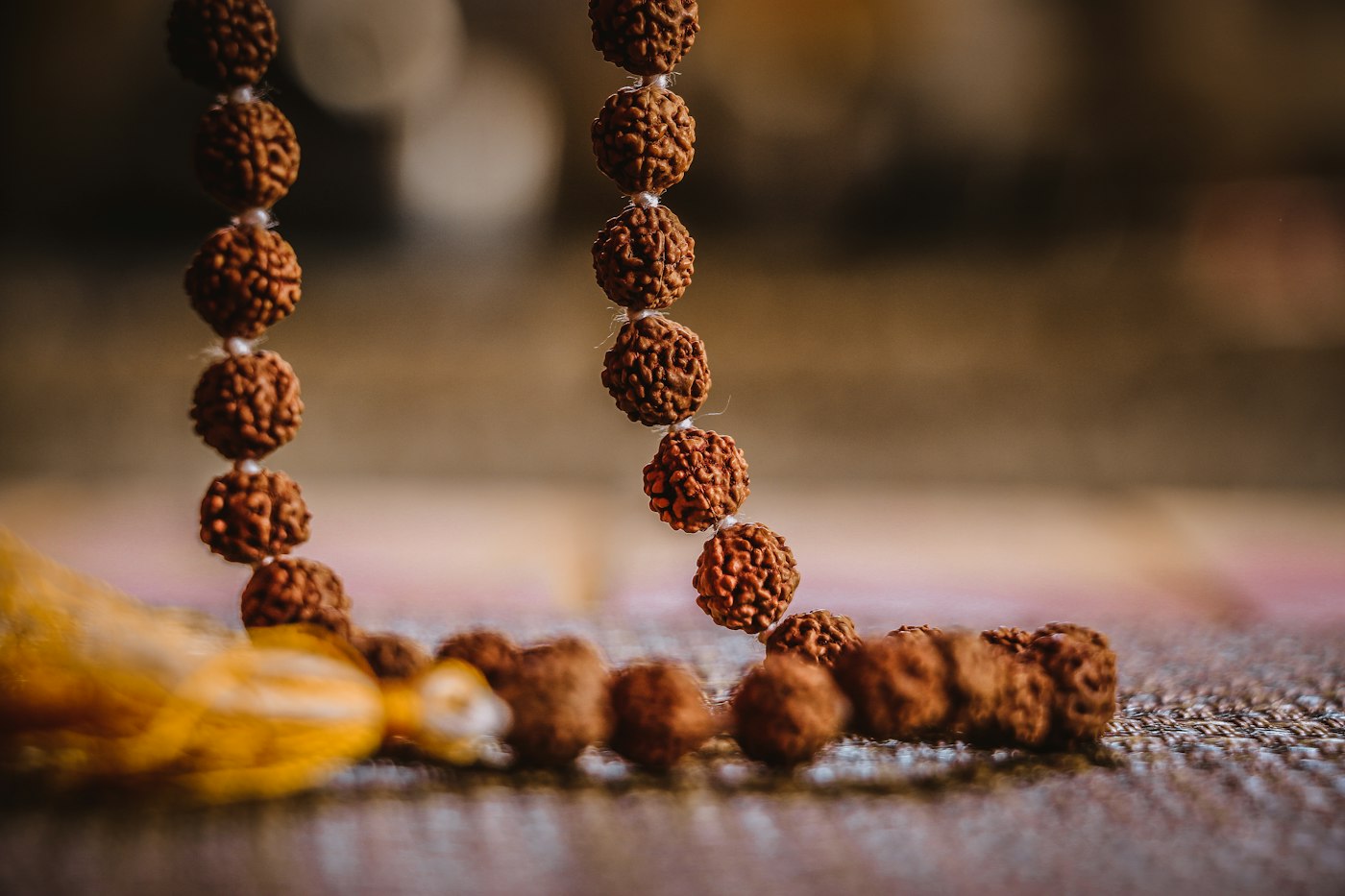
- Japa malaजप माला
- A string of prayer beads, usually 108 plus a guru bead, for counting mantra repetitions.
- Kanthaकंठा
- A close-fitting Rudraksha necklace worn at the throat.
- Mukhiमुखी
- A natural groove running pole to pole on a Rudraksha bead. The count gives the bead its name, such as five mukhi.
- Panchmukhiपंचमुखी
- A five mukhi Rudraksha, the commonest bead and the usual bead of japa malas.
- Pradoshप्रदोष
- The thirteenth lunar day, at dusk, sacred to Shiva; a favoured time to start wearing Rudraksha.
- Rudrakshaरुद्राक्ष
- The dried seed stone of Elaeocarpus fruit, sacred to Shiva. 'Eye of Rudra'.
- Shravanश्रावण
- The monsoon month (July to August) sacred to Shiva, when many begin wearing Rudraksha.
- Siddhसिद्ध
- 'Perfected': a bead or mala that has been consecrated. Sellers use the word for energised pieces.
- Sumeruसुमेरु
- The guru bead of a mala, where the count turns back rather than crossing over.
- Trijutiत्रिजुटी
- Three Rudraksha beads naturally joined; very rare and often faked by gluing.
Mindfulness
- Anapanasatiआनापानसति
- Mindfulness of breathing, a core Buddhist meditation.
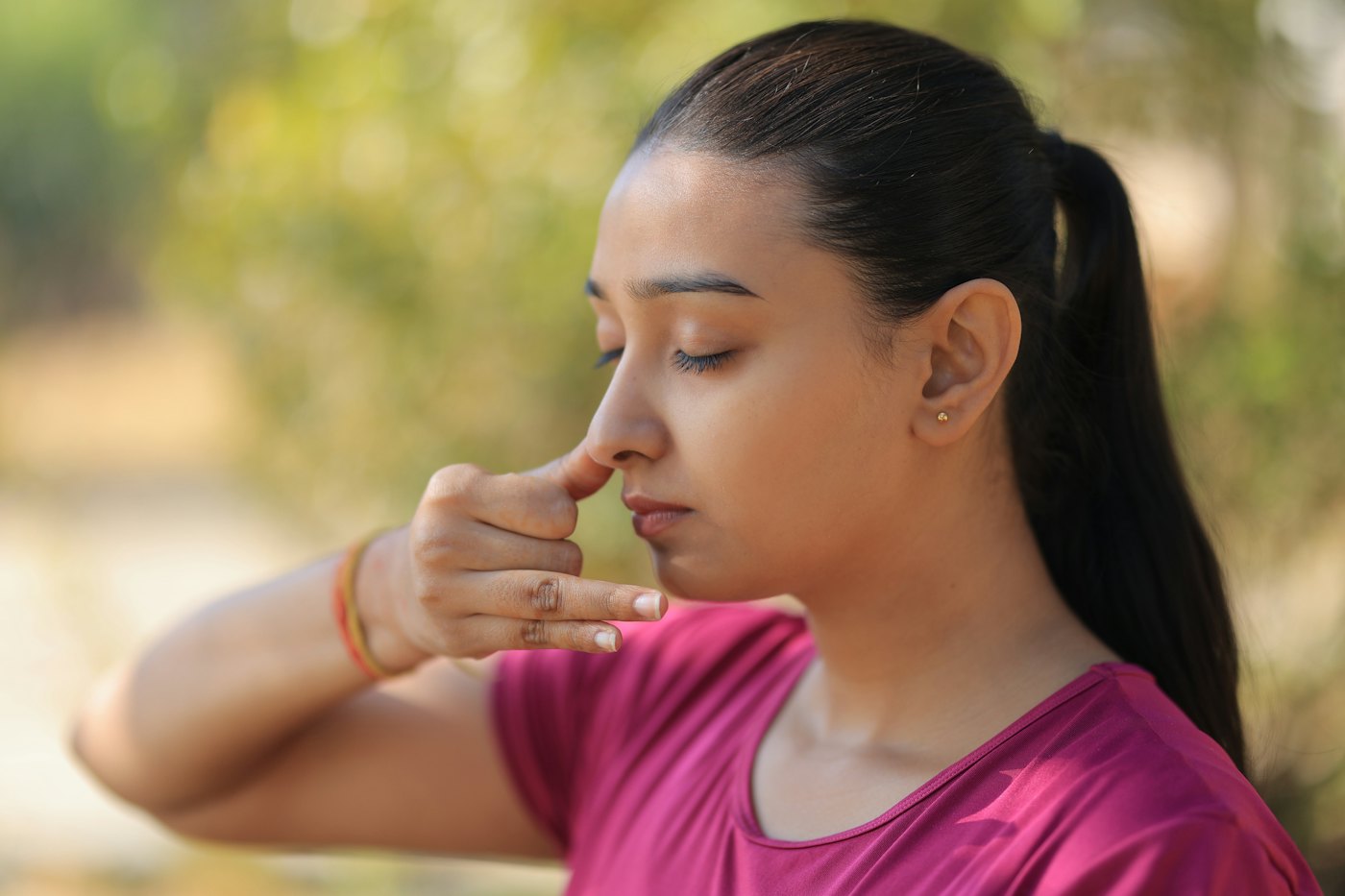
- Anulom vilomअनुलोम विलोम
- Alternate-nostril breathing without breath-holding; a popular name for a gentle form of nadi shodhana.
- Bhastrikaभस्त्रिका
- 'Bellows breath': forceful, rapid breathing. Not for beginners, pregnancy, heart disease or high blood pressure.
- Bhramariभ्रामरी
- 'Bee breath': humming on a slow out-breath, with the ears gently closed.
- Dharanaधारणा
- Concentration: holding the mind on one point. The sixth limb of Patanjali's yoga.
- Dhyanaध्यान
- Meditation: an unbroken flow of attention. The seventh limb of Patanjali's yoga.
- Japaजप
- Repeating a mantra or divine name, often counted on a mala.
- Kapalbhatiकपालभाति
- 'Skull shining': short, forceful out-breaths from the belly; one of the six cleansing practices, with cautions.
- Kumbhakaकुम्भक
- Holding the breath, in or out, during pranayama. Long holds need a teacher.
- Manasika japaमानसिक जप
- Silent japa, repeated only in the mind.
- Mantraमन्त्र
- A sacred sound, word or verse repeated in prayer or meditation.
- Nadi shodhanaनाड़ी शोधन
- 'Channel cleaning': slow alternate-nostril breathing.
- Nyasaन्यास
- Placing attention, or a mantra, on parts of the body in turn, as in the body scan of yoga nidra.
- Pranaप्राण
- Breath, and the life force it is said to carry.
- Pranayamaप्राणायाम
- Breath regulation, from calm slow breathing to vigorous techniques such as kapalbhati.
- Samadhiसमाधि
- Complete absorption, the eighth and final limb of Patanjali's yoga.
- Sankalpaसंकल्प
- A short, sincere resolve, repeated at the start and end of yoga nidra.
- Shatkarmaषट्कर्म
- The six cleansing practices of hatha yoga, including kapalbhati and trataka.
- Shavasanaशवासन
- 'Corpse pose': lying flat and still on the back, the posture of yoga nidra.
- Tratakaत्राटक
- Steady gazing at a small point or a candle flame, then at its after-image with eyes closed.
- Upamshu japaउपांशु जप
- Whispered japa, in which only the lips move.
- Vachika japaवाचिक जप
- Japa chanted aloud.
- Vipassanaविपश्यना
- Insight meditation: observing sensations and thoughts as they arise and pass.
- Yoga nidraयोग निद्रा
- 'Yogic sleep': a guided, lying-down practice of deep relaxation and body awareness.