Abhyanga and shirodhara
Abhyanga is a daily oil massage you can do at home; shirodhara is a stream of warm oil on the forehead, given in a clinic. Here is how each is done, and the evidence.
The short answer
Abhyanga is a full-body massage with warm oil, which the classical texts recommend daily, especially for the head, ears and feet. You can do it yourself in ten to twenty minutes before a bath. Shirodhara is a clinic therapy in which warm oil, milk or buttermilk is poured in a steady stream on the forehead for thirty to sixty minutes. Both are relaxing for many people; small studies suggest lower stress and better sleep, but none is large enough to be sure. They are not treatments for any disease.
In this guide
Abhyanga: the daily oil massage
The Ashtanga Hridaya lists abhyanga in the daily routine (dinacharya): it is said to slow ageing, relieve tiredness and vata, nourish the body, improve sleep and give firm, glowing skin. It singles out the head, the ears and the soles of the feet. In many Indian homes the habit survives as a Sunday oiling of the hair, or the daily massage of babies.
Which oil
- Sesame oil (til), the classical choice, warming; use plain cold-pressed sesame, not the dark toasted cooking oil.
- Coconut oil, cooling, preferred in hot weather and in the south.
- Mustard oil, common in north Indian homes in winter; it can irritate sensitive skin.
- Medicated oils such as those cooked with herbs; buy from a licensed manufacturer.
Patch-test a new oil on your inner arm first, and avoid nut oils if you have a nut allergy.
How to do it
- Warm two to four tablespoons of oil by standing the bottle in hot water. Test it on your wrist: it should feel pleasantly warm, never hot.
- Start with the scalp, then the ears and face.
- Use long strokes along the arms and legs and circular strokes over the joints, the belly and the chest.
- Finish with the soles of the feet.
- Leave the oil on for ten to fifteen minutes, then bathe in warm water. Take care: oily feet on a wet floor slip easily.
When not to
The texts advise against abhyanga during indigestion, fever, a heavy cold or congestion (a kapha state), straight after a meal, and right after cleansing therapies. Modern sense adds broken or infected skin, rashes, and recent surgery or injury.
Abhyanga is food for the skin and calm for the nerves: a daily habit that keeps vata settled, the body supple and sleep deep.
Massage of many kinds lowers self-reported stress and anxiety in the short term. A small 2011 pilot study of Ayurvedic abhyanga found lower stress and blood pressure after sessions, but it had 20 people and no comparison group. There is no evidence that oils “detoxify” the skin.
Shirodhara: oil on the forehead
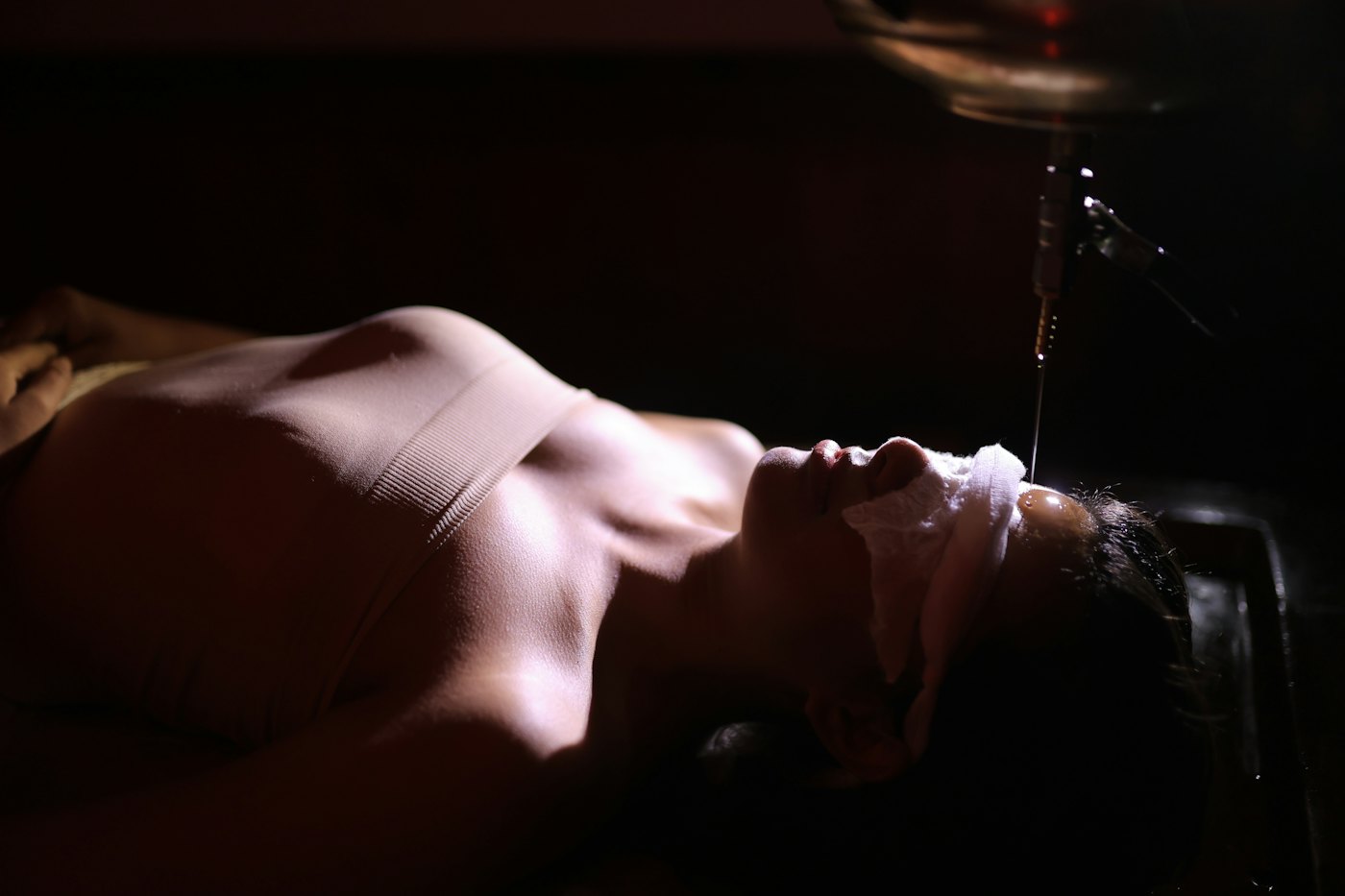
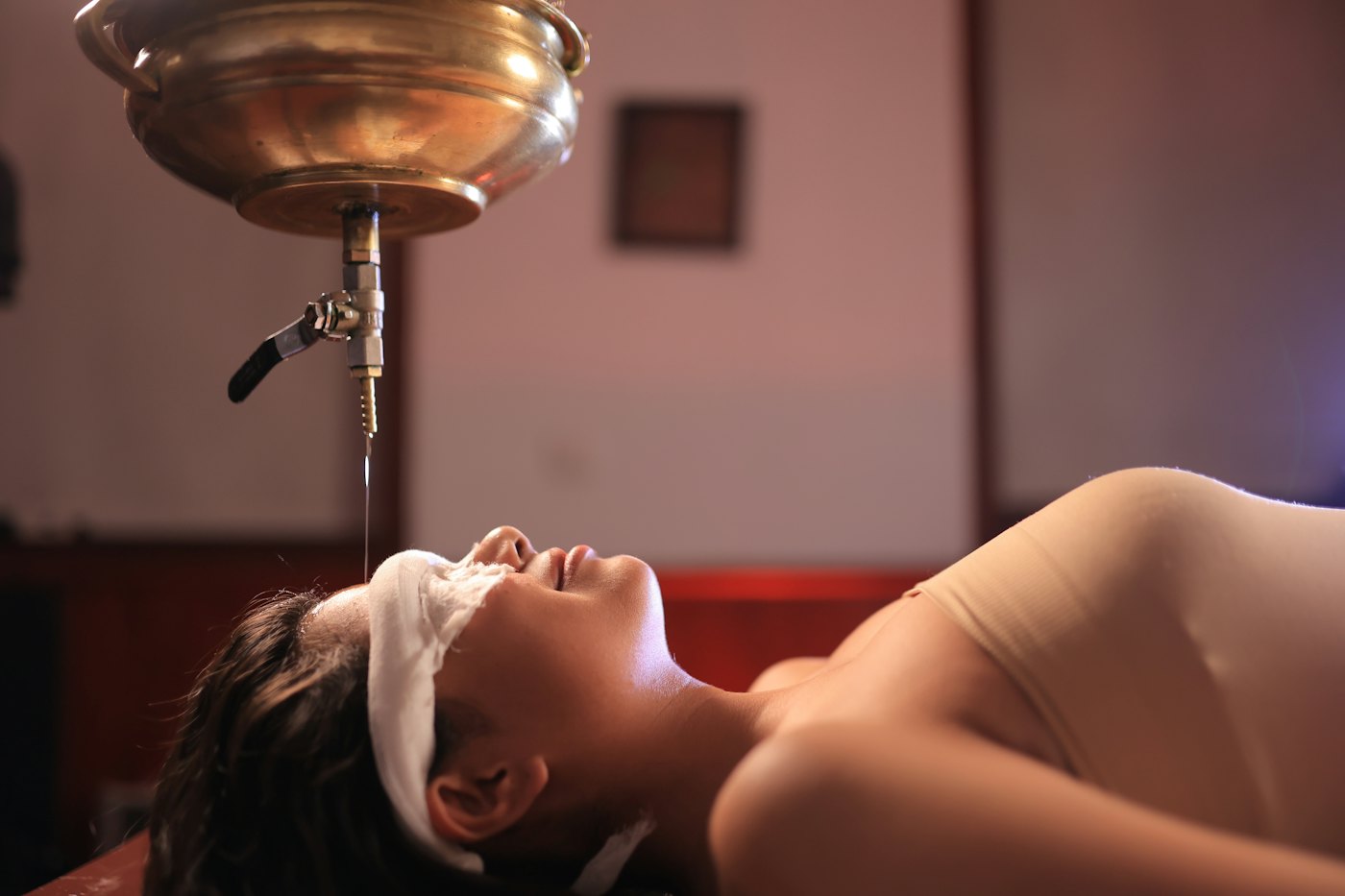
In shirodhara the person lies on a wooden table while a therapist pours a thin, steady stream of warm liquid from a pot hung above, moving it slowly across the forehead. Sessions last thirty to sixty minutes and are usually given over several days. The liquid may be medicated oil, milk (ksheeradhara) or buttermilk (takradhara).
Ayurveda uses it for sleeplessness, anxiety, headaches and mental fatigue. Small trials, mostly from India and Japan, report better sleep and lower anxiety scores, but they are few, short and not blinded. Many people simply find it deeply relaxing.
Have shirodhara only from a trained therapist, under a qualified Ayurvedic doctor where possible, with the temperature checked and the eyes protected. It is not suitable if you have a head injury, a fever, a scalp infection or a cold.
Related: panchakarma, oil pulling and the morning routine.
Questions readers ask
Which oil is best for abhyanga?
Cold-pressed sesame oil is the classical choice; coconut oil suits hot weather; mustard oil is common in north Indian winters. Patch-test any new oil.
How long should I leave the oil on before bathing?
Ten to fifteen minutes is enough for most people. Bathe in warm water and take care on a slippery floor.
Can I do abhyanga every day?
The classical texts recommend it daily, but skip it during fever, indigestion, a heavy cold, or on broken skin or rashes.
What is shirodhara good for?
Ayurveda uses it for poor sleep, anxiety and headaches. Small studies report better sleep and lower anxiety, but the evidence is limited. Many people find it very relaxing.
Is shirodhara safe?
With a trained therapist, a checked temperature and protected eyes, it is low-risk for most adults. Avoid it with a head injury, fever, scalp infection or cold.
Sources
- Vagbhata, Ashtanga Hridaya, Sutrasthana chapter 2 (Dinacharya), on abhyanga
- Basler AJ. Pilot study investigating the effects of Ayurvedic Abhyanga massage on subjective stress experience. Journal of Alternative and Complementary Medicine, 2011
- NCCIH: Massage Therapy: What You Need To Know
- NCCIH: Ayurvedic Medicine, In Depth
A note on health. This guide explains a tradition. It is not medical advice, and nothing in it is a treatment for any disease. See a qualified doctor for symptoms, and do not stop or change a prescribed medicine on the strength of anything you read here. Full medical disclaimer.