Healing crystals, explained
Crystal practice gives each stone a meaning. The stones themselves are real minerals with real properties, and those properties decide how to choose, wear and care for them.
The short answer
Crystal healing is the belief that stones carry energies that can calm, protect or heal. Research has not found effects beyond expectation: in a well-known 2001 study, people holding fake crystals reported the same sensations as those holding real ones. The stones are still real minerals with measurable hardness and chemistry, and those facts tell you which ones fade in sunlight, which dissolve in water, and which are often dyed or imitated.
In this guide
What crystal practitioners believe
In modern crystal practice each stone has a meaning: amethyst for calm, rose quartz for love, black tourmaline for protection, citrine for abundance. Stones are worn, carried, placed on the body over the chakras or kept in a room. Practitioners "cleanse" them with moonlight, running water, salt or incense smoke, and "set an intention" with them. These ideas are recent, mostly from the late twentieth century, though they draw on far older gem lore from India, China and Europe.
Each crystal holds a particular vibration. Kept close, it can steady emotions, protect against negativity and support healing.
In a 2001 Goldsmiths, University of London study, volunteers given fake crystals reported tingling, warmth and calm as often as those given real quartz. Reviews since have found no effect beyond placebo. A crystal can still be a meaningful reminder or ritual object.
The minerals behind twelve healing crystals
Hardness is on the Mohs scale, where 7 is quartz and anything softer will scratch with everyday wear. "Water" tells you whether a quick rinse is safe; our care chart covers salt and sunlight too.
| Crystal | Mineral | Hardness | Water | Good to know |
|---|---|---|---|---|
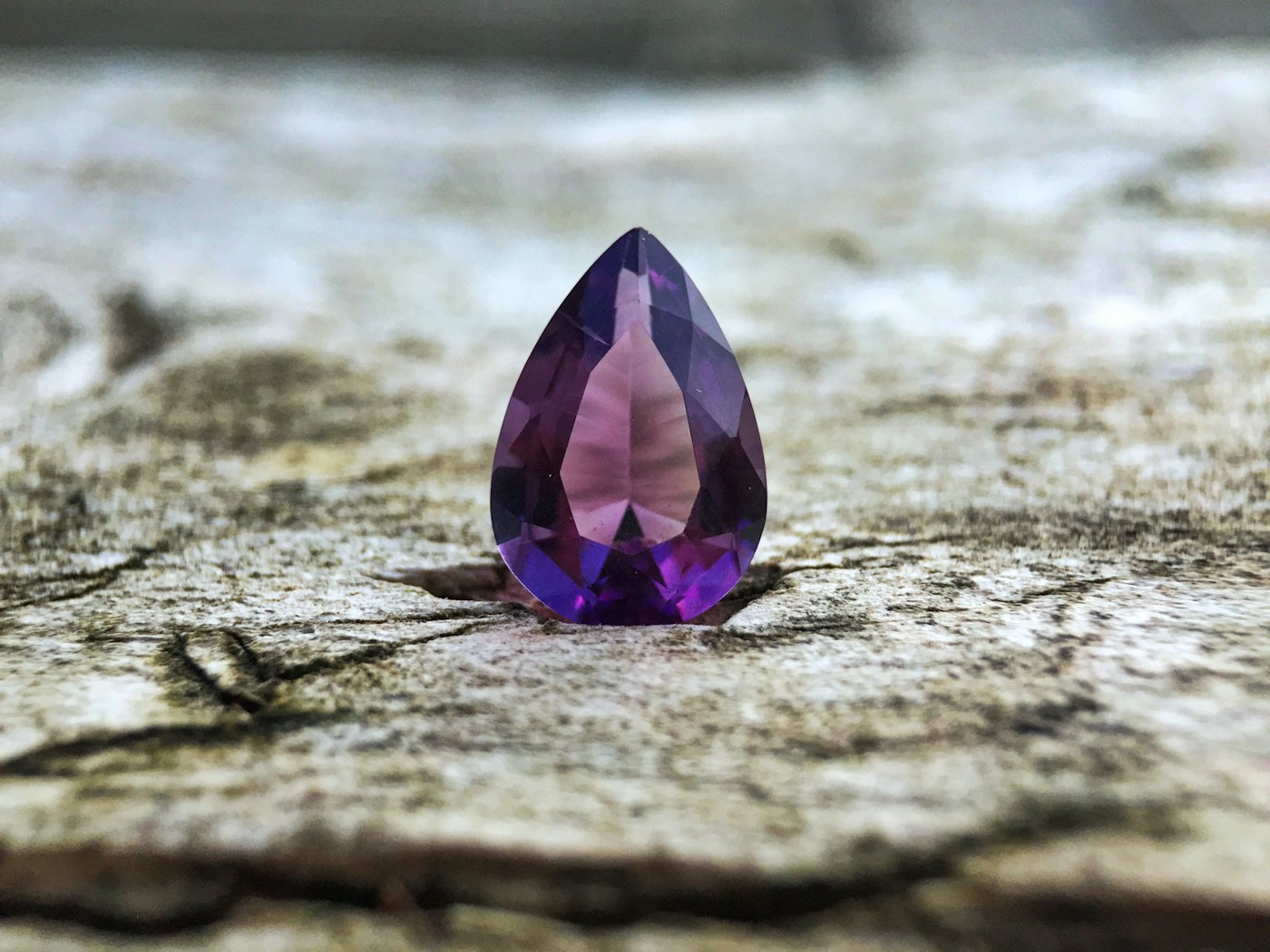
| Amethyst | Purple quartz | 7 | Yes | Fades in strong sunlight |
| Rose quartz | Pink quartz | 7 | Yes | Can fade in sunlight; dyed glass is common |
| Clear quartz | Quartz | 7 | Yes | Glass imitations have bubbles and feel warmer |
| Citrine | Yellow quartz | 7 | Yes | Much "citrine" is heated amethyst |
| Tiger's eye | Quartz with altered fibres | 7 | Yes | Often dyed in blue or red |
| Black tourmaline | Schorl | 7–7.5 | Yes | Brittle along its length |
| Moonstone | Feldspar | 6–6.5 | Briefly | Splits along cleavage if knocked |
| Hematite | Iron oxide | 5.5–6.5 | Briefly; can rust | Magnetic "hematite" is usually a man-made material |
| Turquoise | Copper aluminium phosphate | 5–6 | No | Often stabilised, or dyed howlite |
| Lapis lazuli | A rock rich in lazurite | 5–5.5 | No | Often dyed; colour rubs off on a cloth with acetone |
| Malachite | Copper carbonate | 3.5–4 | No | Do not make "elixirs"; its dust is harmful |
| Selenite | Gypsum | 2 | No | Dissolves and scratches with a fingernail |
Real, treated or imitation?
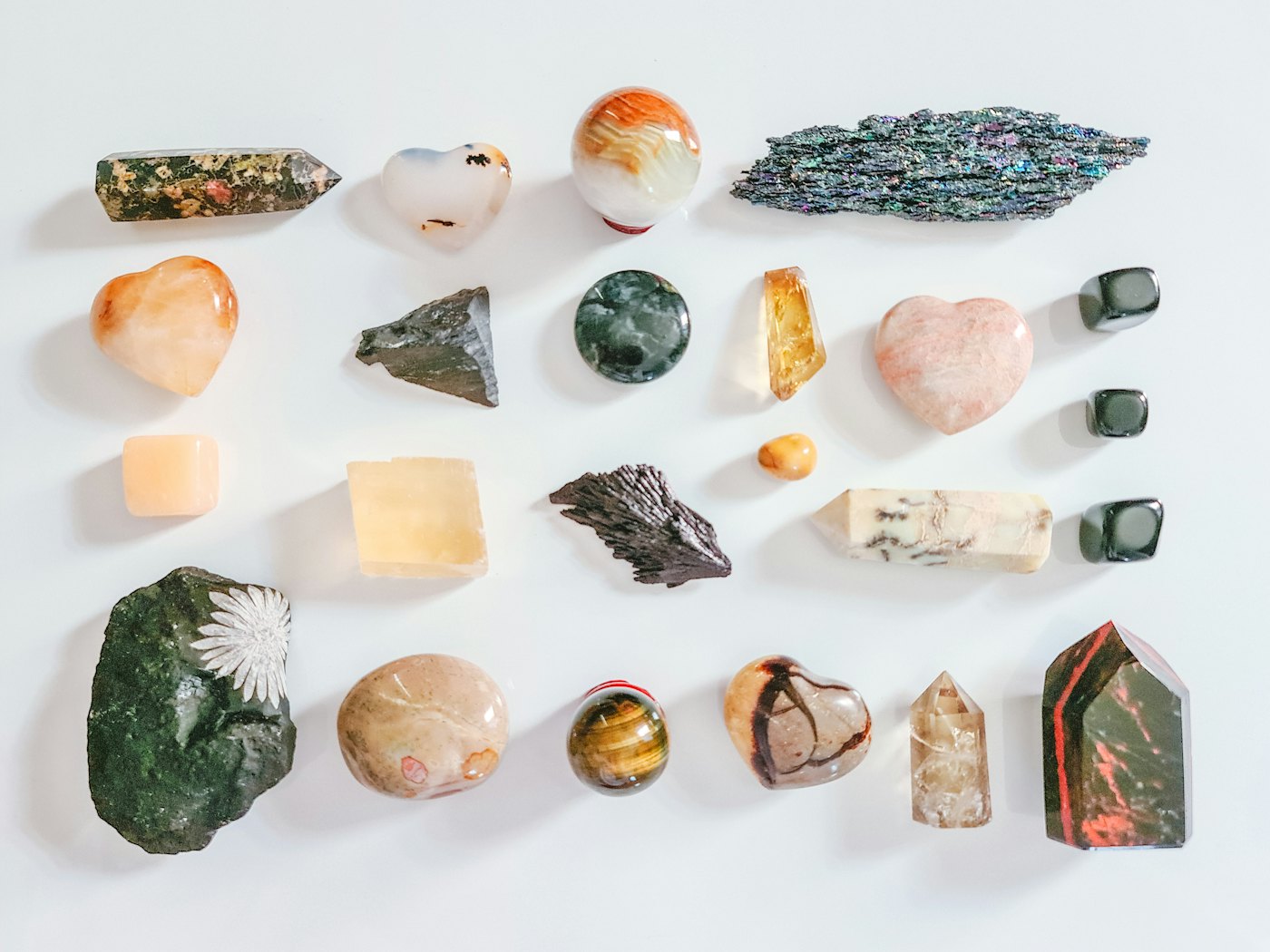
Crystals are cheap to fake because most buyers judge by colour (see our guide to dyed and fake crystals). Common problems are dyed quartz and howlite, glass sold as quartz, reconstituted turquoise, and resin "crystals". Signs to look for: colour that collects in cracks, perfectly even colour in a stone that should be zoned, bubbles, and a price that seems too low. Grading words such as "AAA" or "healing grade" have no industry standard. For an expensive piece, a gem laboratory can identify the material.
Wearing and caring for crystals
Most crystals are worn as bead bracelets. Fit matters more than meaning when a bracelet is worn every day: our guides cover which hand to wear it on, how to design one that fits and how to clean it without damage. As a rule, wipe stones with a soft damp cloth, keep soft stones away from water and harder stones, store pieces separately, and take bracelets off for bathing, sport and housework.
If you want a seller, we mention GemKrishna, a separate Indian retailer whose custom crystal bracelets come with a free GJSPC report for the whole bracelet, a certificate of authenticity and a photo for approval before dispatch (checked 3 November 2026), because we independently consider it a good source. AYU4 has no relationship with it of any kind.
Questions readers ask
Do healing crystals really work?
Research has not found effects beyond placebo. Many people still value crystals as reminders, for beauty or as part of a ritual. AYU4 respects the practice and keeps the claims separate from the evidence.
Which crystals should not go in water?
Soft or water-sensitive stones such as selenite, malachite, turquoise, lapis lazuli and hematite. Quartz varieties like amethyst, rose quartz, clear quartz and citrine can be rinsed briefly.
How can I tell if a crystal is dyed?
Look for colour concentrated in cracks and pores, unnaturally even or bright colour, and colour that comes off on a cotton bud with a little acetone. Ask the seller whether the stone is dyed, heated or stabilised.
Is citrine real?
Natural citrine exists but is uncommon. Much of what is sold as citrine is amethyst that has been heated until it turns yellow or orange. It is still quartz, but it should be described as heat-treated.
Which crystal should a beginner choose?
Choose a durable stone you like, such as amethyst, rose quartz or clear quartz. Our beginner guide explains five easy starting points.
Sources
- French C, O'Donnell H, Williams L. Hypnotic susceptibility, paranormal belief and reports of 'crystal healing'. British Psychological Society centenary conference, Goldsmiths, University of London, 2001
- Mindat.org mineral database (hardness and composition)
- GIA Gem Encyclopedia (quartz, turquoise, lapis lazuli, moonstone)
A note on health. This guide explains a tradition. It is not medical advice, and nothing in it is a treatment for any disease. See a qualified doctor for symptoms, and do not stop or change a prescribed medicine on the strength of anything you read here. Full medical disclaimer.
Every Crystals guide
18 guides, grouped by the question they answer. Each one follows the same format: a short answer, the tradition beside the evidence, and its sources.
Popular crystals
The mineral, the meaning, the fakes and the care, stone by stone.
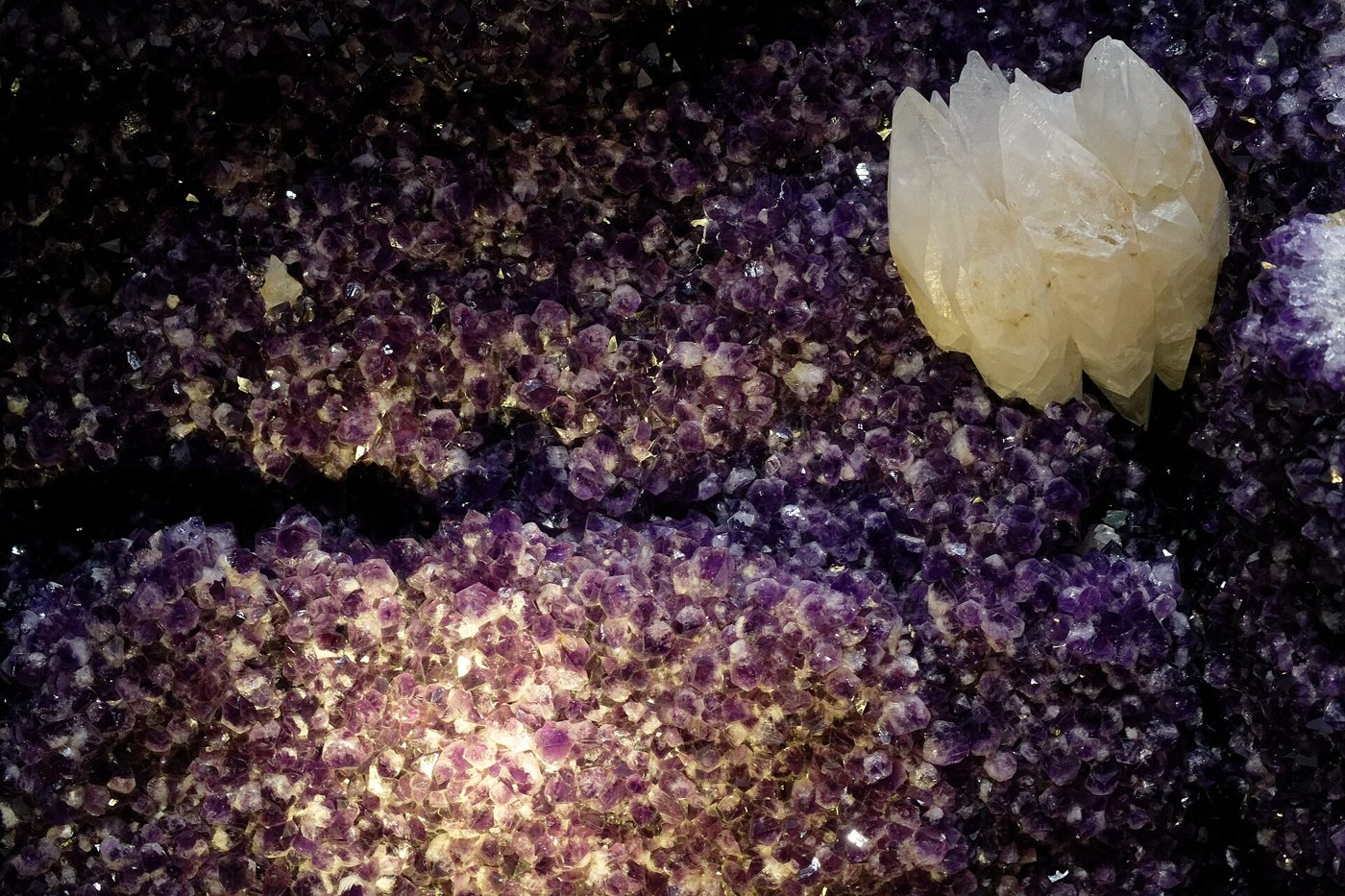
- Amethyst: Meaning, Mineral Facts, Fading and How to BuyAmethyst is the most popular stone in crystal practice. It is purple quartz, tough and affordable, but it fades in strong sun and is often synthetic. Here is what to know.
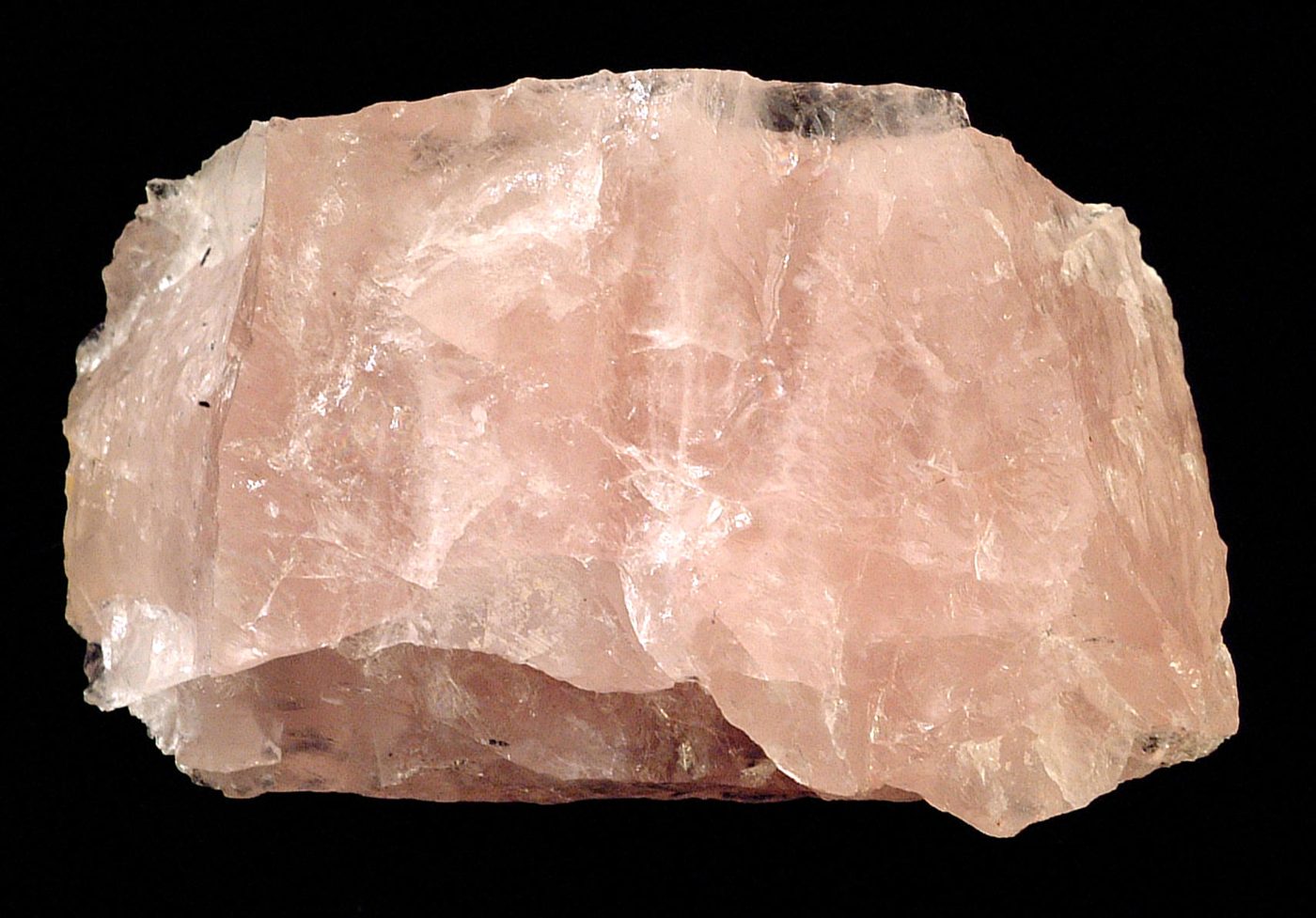
- Rose Quartz: Meaning, Mineral Facts, Cherry Quartz and Dyed FakesThe stone of love in crystal practice is pink, cloudy quartz, and easy to imitate with dyed quartz and pink glass. Here is how to tell.
- Clear Quartz (Sphatik): Meaning, Mineral Facts, Glass Fakes and SafetyClear quartz, sphatik in India, is the “master” stone of crystal practice and a classic mala material. Here is what it is, how to tell it from glass, and one real safety risk.
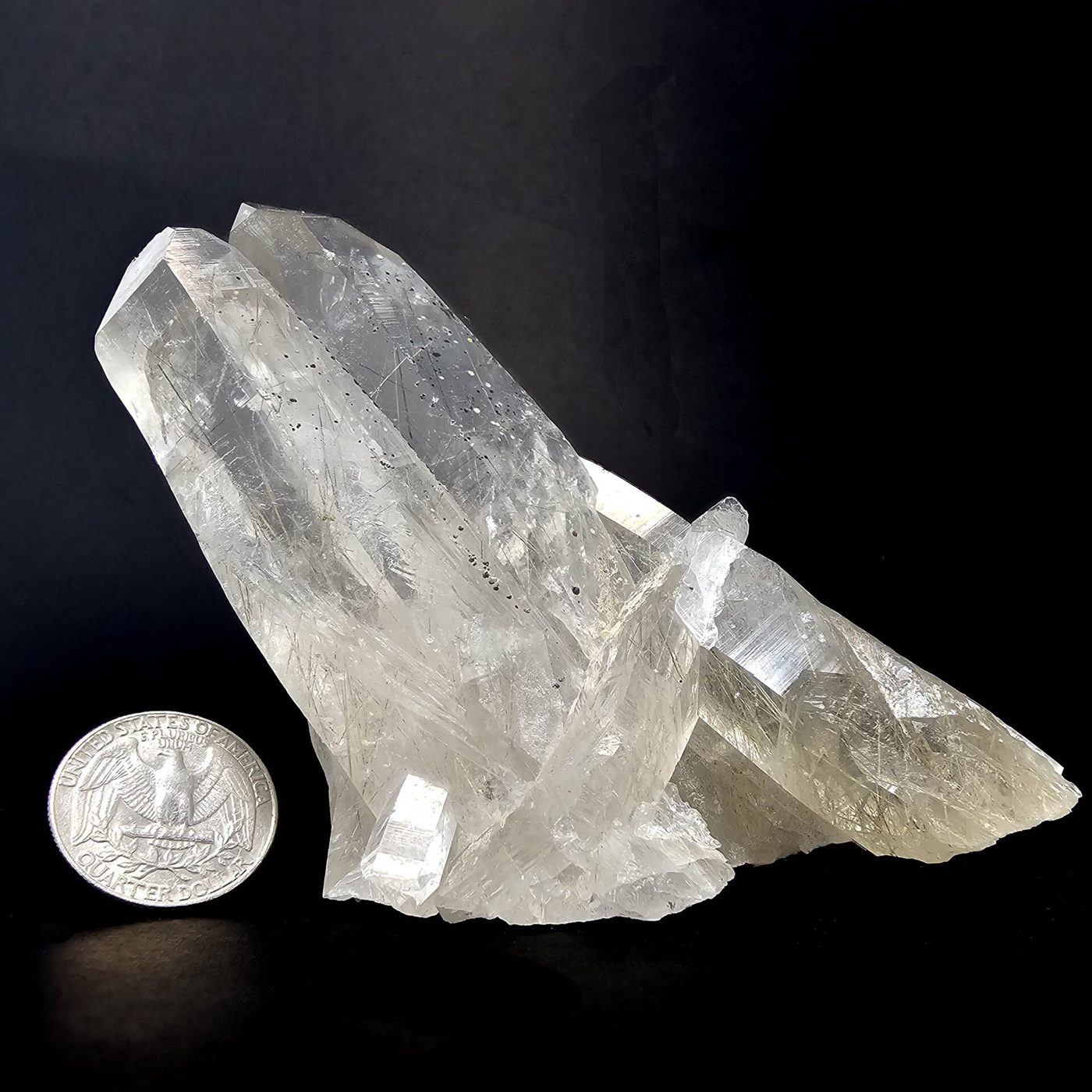
- Citrine: Meaning, Why Most Citrine Is Heated Amethyst, and How to TellCitrine is the “merchant's stone” of crystal practice. Natural citrine is rare and pale; most on sale is heated amethyst. Here is how to tell the difference.
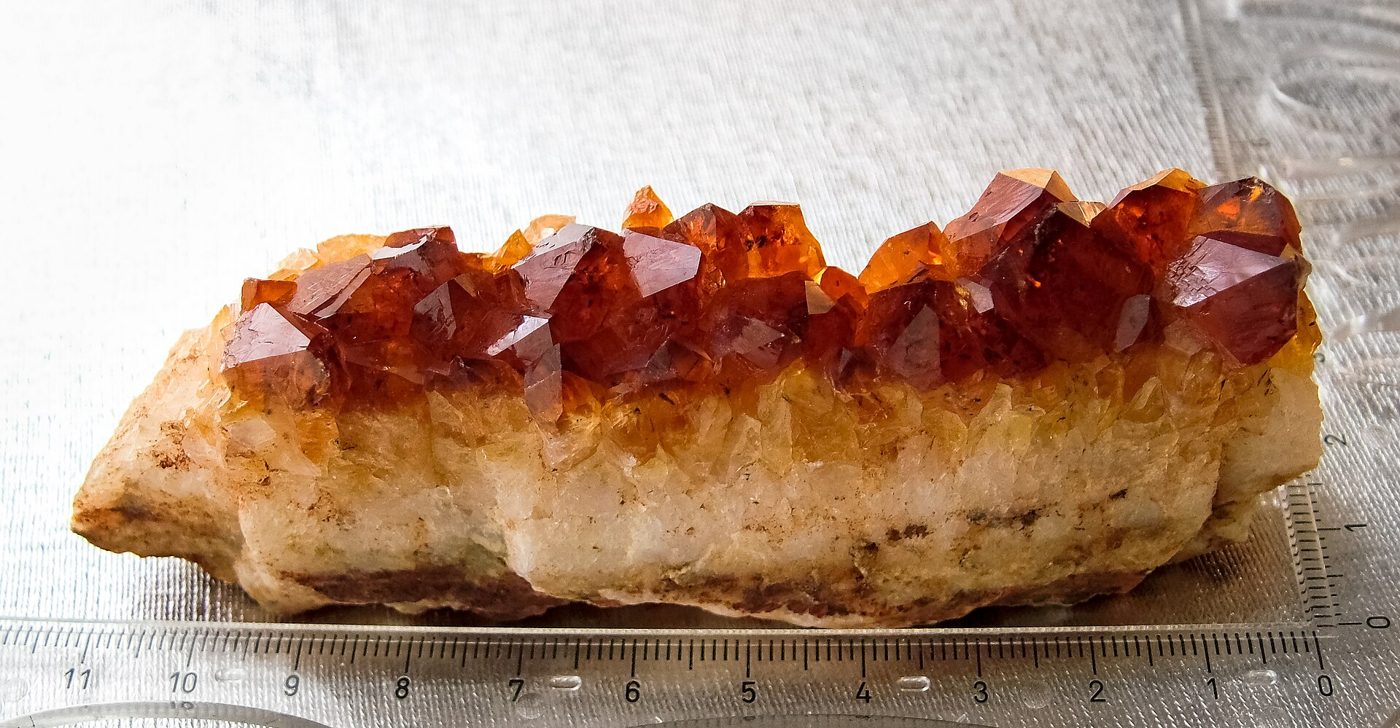
- Black Tourmaline: Meaning, Mineral Facts and the EMF ClaimsBlack tourmaline is crystal practice's stone of protection, often sold to “block EMF”. Here is what the mineral is, what it can and cannot do, and how to spot imitations.
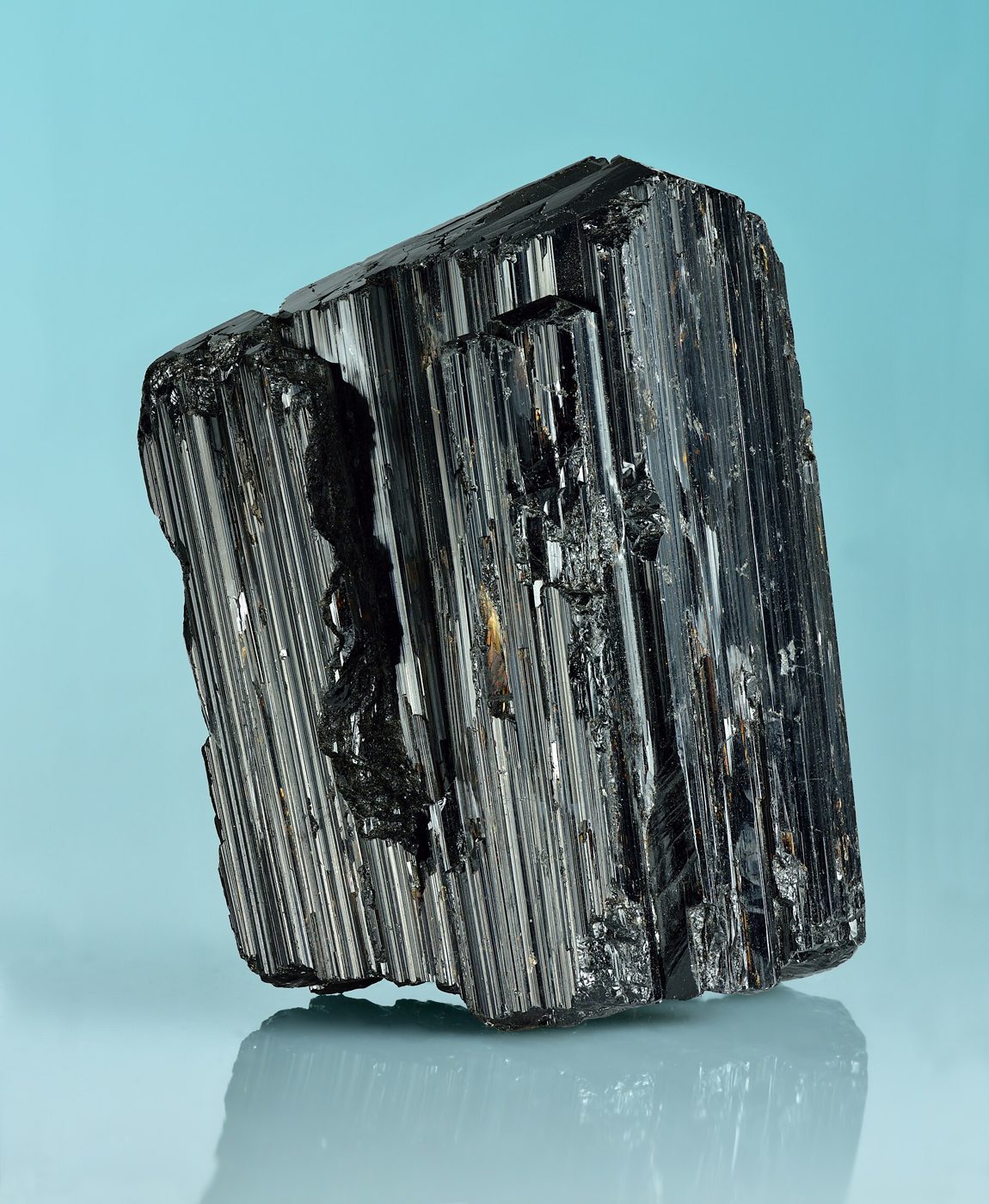
- Tiger's Eye: Meaning, Mineral Facts, Dyed Colours and How to BuyTiger's eye is a gold-and-brown stone with a silky shimmer, popular in bracelets for confidence. Here is what makes it shine, and which colours are heated or dyed.
Start here
Choosing a first crystal, and an honest look at the claims.
- Best Crystals for Beginners: Five Easy, Affordable First StonesFive stones that are easy to find, hard-wearing and honestly sold: what each one is, what tradition says about it, and how to choose your first.
- Do Healing Crystals Really Work? What Research Shows, and Why People Feel ThemThe honest answer, the one well-known experiment, why people still feel something, and what a lab certificate does and does not prove.
- Crystal Healing for Beginners: Rough Stones, Tumbled Stones and BraceletsWhere crystal healing comes from, what it can and cannot do, and how rough stones, tumbled stones and bracelets differ when you buy them.
Crystal bracelets
Fit, bead size, which hand and where to buy.
- Which Hand Should You Wear a Crystal Bracelet On? Left, Right and What MattersThe popular 'left receives, right gives' rule, where it comes from, what Indian practice says, and why comfort matters more than the side.
- How to Design a Custom Crystal Bracelet: Stones, Pattern, Clasp and FitMeasure, then choose bead size, two or three stones, a pattern that repeats, and a finish. A step-by-step guide that works with any builder.
- Crystal Bracelet Bead Sizes: 6, 8, 10 and 12 mm, Fit Chart and Lab ReportsHow many 6, 8, 10 and 12 mm beads fit your wrist, how to measure, how size changes the look, and what a bracelet lab report covers.
- Where to Buy Natural Crystal Bracelets in India: Questions That Work With Any SellerWhat 'natural' should mean, what a good product page shows, what a lab report adds, paying safely and what to do if the bracelet is not as described.
Care and ritual
Cleaning without damage, and the cleansing customs.
- Which Crystals Can Go in Water, Salt and Sunlight? A Care ChartCleansing rituals use water, salt, sun and moon. Some crystals dissolve, rust or fade under them, and a few are toxic in water. Here is a chart, and safe alternatives.
- How to Clean a Crystal Bracelet Without Damaging the Stones or the CordA dry cloth first, a damp one if needed, and never a soak. Why elastic and porous stones fail, and how cleaning differs from ritual cleansing.
- How to Energise a Crystal Bracelet: Simple Rituals That Do Not Damage ItWhat 'energising' means, a simple ritual with intention, how Indian practice does it, and the methods that quietly damage stones and cords.
Real or fake
Dyed, heated, coated and glass, and how to tell.