Tulsi, the holy basil
Tulsi grows in a pot in millions of Indian courtyards. Here is what it means in worship and in Ayurveda, how to make tulsi tea, and what the research does and does not show.
The short answer
Tulsi (Ocimum tenuiflorum, also called O. sanctum) is holy basil, a sacred plant in Hindu homes and a common Ayurvedic herb for coughs, colds and fevers. Ayurveda describes it as warming and pungent, calming kapha and vata. A systematic review in 2017 found small human studies with favourable results on blood sugar, stress and immunity, but most were short and of low quality. As a tea or a few fresh leaves it is generally regarded as safe; concentrated supplements need more care in pregnancy, when trying to conceive, and with diabetes or blood-thinning medicines.
In this guide
The plant in the courtyard
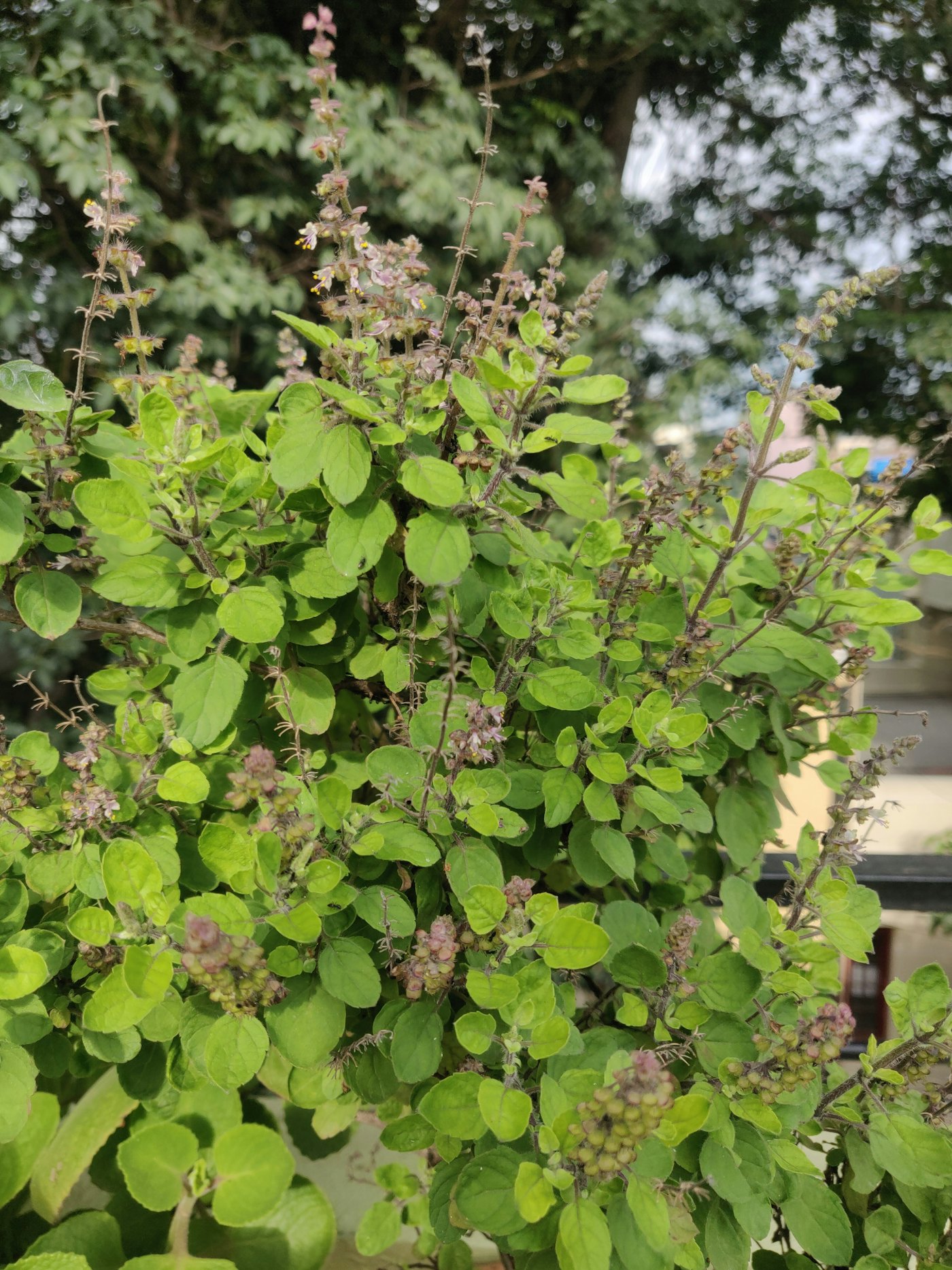
Tulsi is an aromatic basil, a cousin of the Italian basil used in cooking, with a sharper, clove-like scent. In many Hindu homes it grows in a raised pot or pillar called a tulsi vrindavan, watered each morning and lit with a lamp at dusk. It is linked with Lakshmi and with Vishnu, and the marriage of tulsi to Vishnu (tulsi vivah) is celebrated in the month of Kartik. Leaves are offered in worship, and malas of tulsi wood are worn by Vaishnavas.
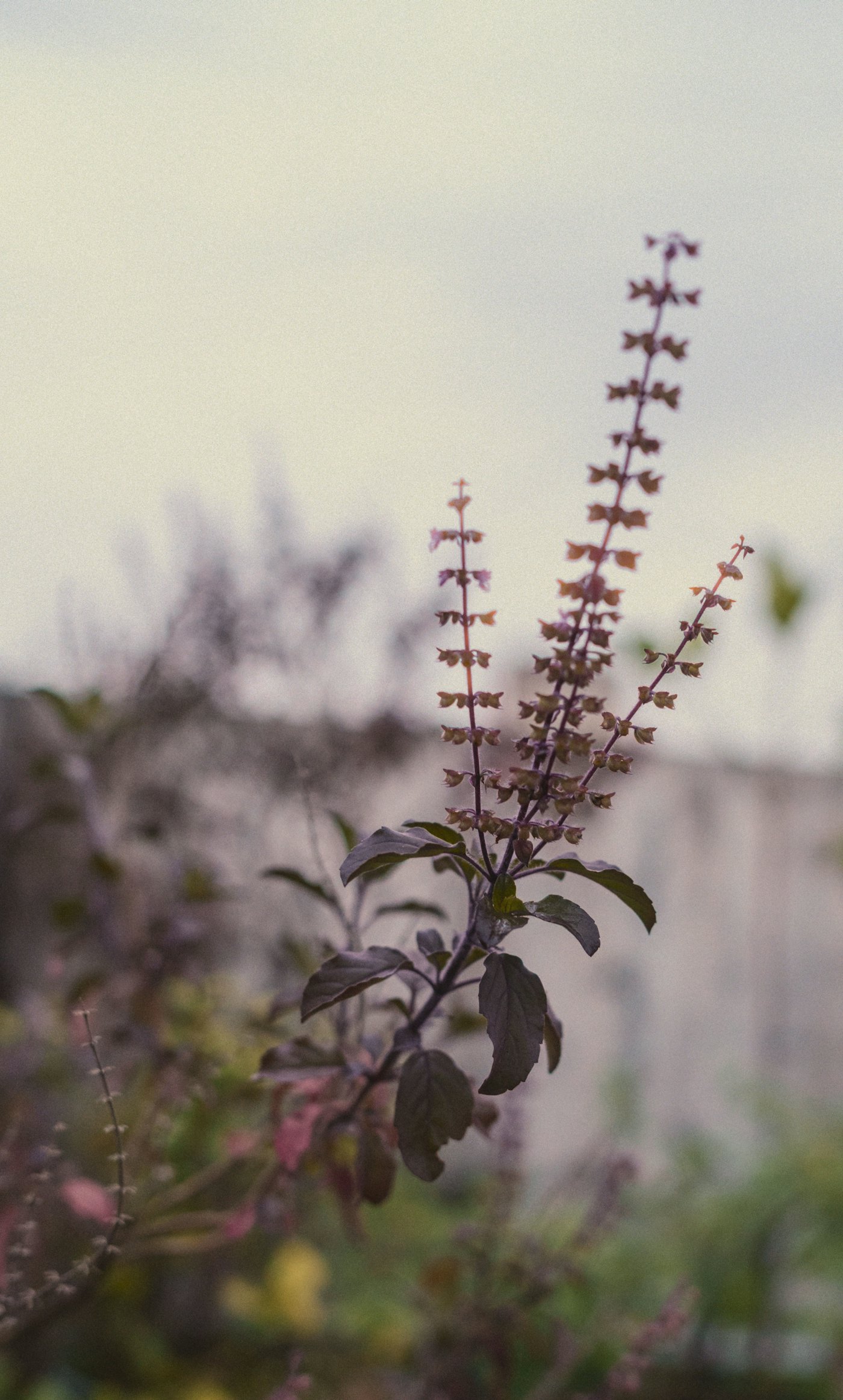
Three kinds are common. Rama tulsi has green leaves and a milder taste. Krishna or Shyama tulsi has purple stems and leaves and is more pungent. Vana tulsi (Ocimum gratissimum) is a related wild basil. All are used in the same way at home.
What Ayurveda says
The texts call tulsi surasa and describe it as pungent and bitter in taste, light and dry in quality, and heating. That profile makes it a herb for kapha and vata conditions of the chest and throat: coughs, colds, congestion and fevers with chills. It is also used for appetite and digestion. The household form is a decoction or tea of fresh leaves with ginger, black pepper and sometimes honey, the base of many a kadha.
Tulsi clears phlegm, eases coughs and colds, supports digestion and is a daily protective herb, used with devotion. Because it is heating, people with a lot of pitta are advised to take less in hot weather.
A 2017 systematic review in Evidence-Based Complementary and Alternative Medicine found 24 human studies reporting benefits on blood sugar, blood fats, stress and immune measures, with few side effects. The authors noted that the studies were small, short and mostly poorly designed. No reliable trial shows tulsi prevents or treats infections.
How to make tulsi tea
- Rinse eight to ten fresh leaves, or take a teaspoon of dried leaf.
- Simmer in a cup and a half of water for five minutes, with a slice of fresh ginger and two crushed peppercorns if you like.
- Strain, let it cool a little, and add honey only once it is warm rather than hot, as the tradition advises.
That is a food-level amount. A cup or two a day is the way most people in India have always used it.
Safety
- Tea and fresh leaves are generally regarded as safe for adults.
- Pregnancy and conception: animal studies suggest high doses may affect fertility. Avoid supplements if you are pregnant or trying to conceive.
- Diabetes medicines: tulsi may lower blood sugar, so watch for lows if you take supplements.
- Blood thinners and surgery: it may slow clotting. Stop supplements two weeks before surgery.
For how tulsi fits the daily routine, see the Ayurvedic morning routine; for seasonal use, see ritucharya.
Questions readers ask
What is the difference between Rama tulsi and Krishna tulsi?
Rama tulsi has green leaves and a milder taste; Krishna (Shyama) tulsi has purple leaves and stems and a sharper taste. Both are Ocimum tenuiflorum and are used the same way at home.
Can I drink tulsi tea every day?
A cup or two of tulsi tea is a traditional daily habit and is generally regarded as safe for adults. Concentrated supplements are different; check with your doctor if you take medicines.
Does tulsi boost immunity?
Ayurveda uses it as a protective herb. Small studies report changes in some immune measures, but no reliable trial shows that tulsi prevents or treats infections.
Is tulsi safe in pregnancy?
Food amounts are a common part of Indian diets, but avoid tulsi supplements in pregnancy or when trying to conceive, because animal studies raised concerns about fertility.
Sources
- Jamshidi N, Cohen MM. The clinical efficacy and safety of Tulsi in humans: a systematic review of the literature. Evidence-Based Complementary and Alternative Medicine, 2017
- Bhavaprakasha Nighantu, Pushpa varga (entry on tulasi). Classical materia medica, 16th century
- Ocimum tenuiflorum, Plants of the World Online, Royal Botanic Gardens, Kew
- NCCIH: Ayurvedic Medicine, In Depth
A note on health. This guide explains a tradition. It is not medical advice, and nothing in it is a treatment for any disease. See a qualified doctor for symptoms, and do not stop or change a prescribed medicine on the strength of anything you read here. Full medical disclaimer.