Ashwagandha, plainly
Ashwagandha is Ayurveda's best-known rasayana, now sold worldwide for stress and sleep. Here is what the tradition says, what the trials found, and the cautions that come with it.
The short answer
Ashwagandha (Withania somnifera) is a shrub of the nightshade family whose root Ayurveda uses as a rasayana, a tonic for strength, stamina and sleep. Several small trials, mostly of eight to twelve weeks, found that root extracts lowered self-reported stress and improved sleep a little compared with a placebo. The studies are short and often industry-funded. It can cause stomach upset and drowsiness, has been linked to rare liver injury, and should be avoided in pregnancy and checked with a doctor by anyone with thyroid or autoimmune disease or on regular medicines.
In this guide
What ashwagandha is
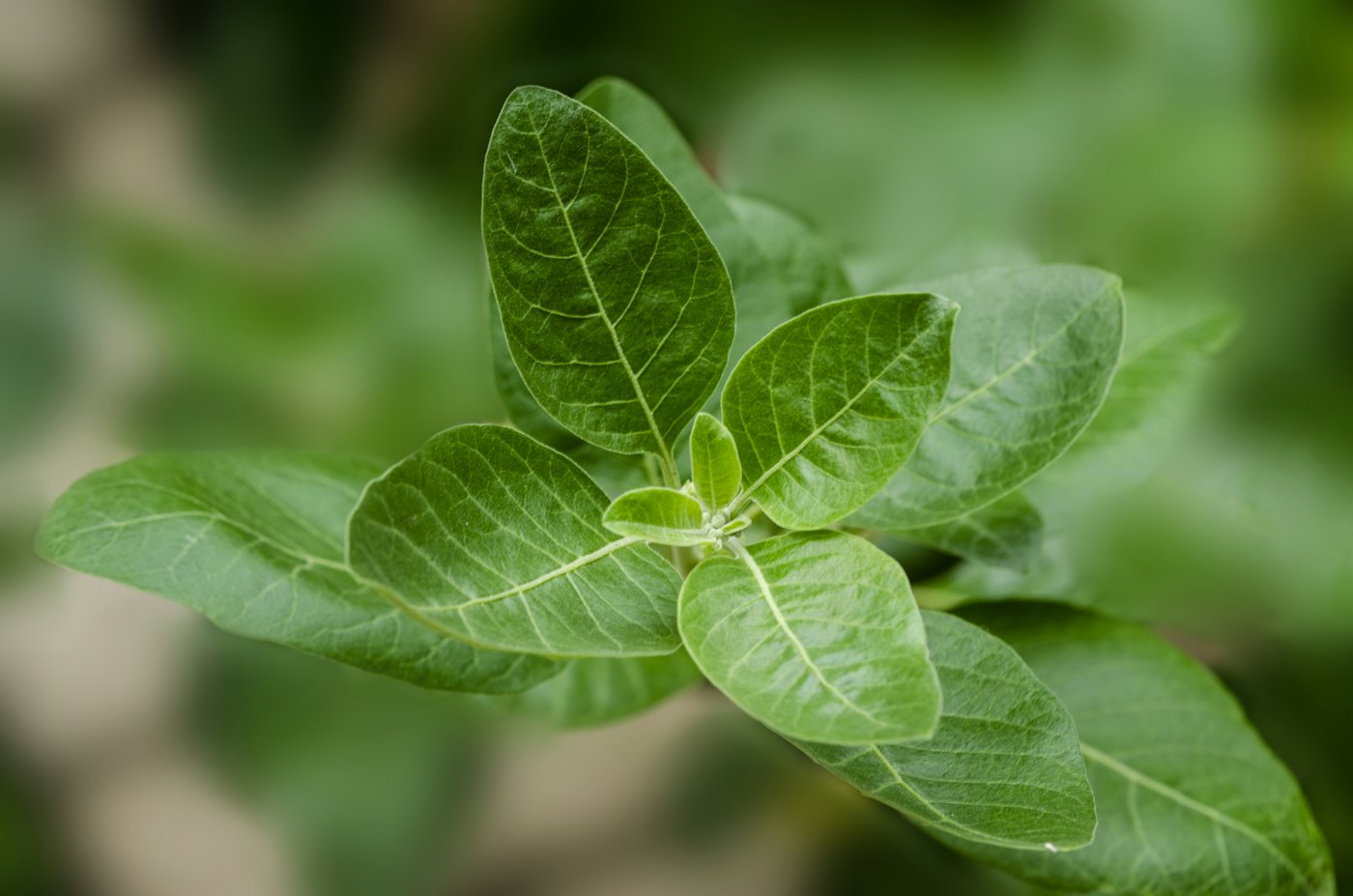
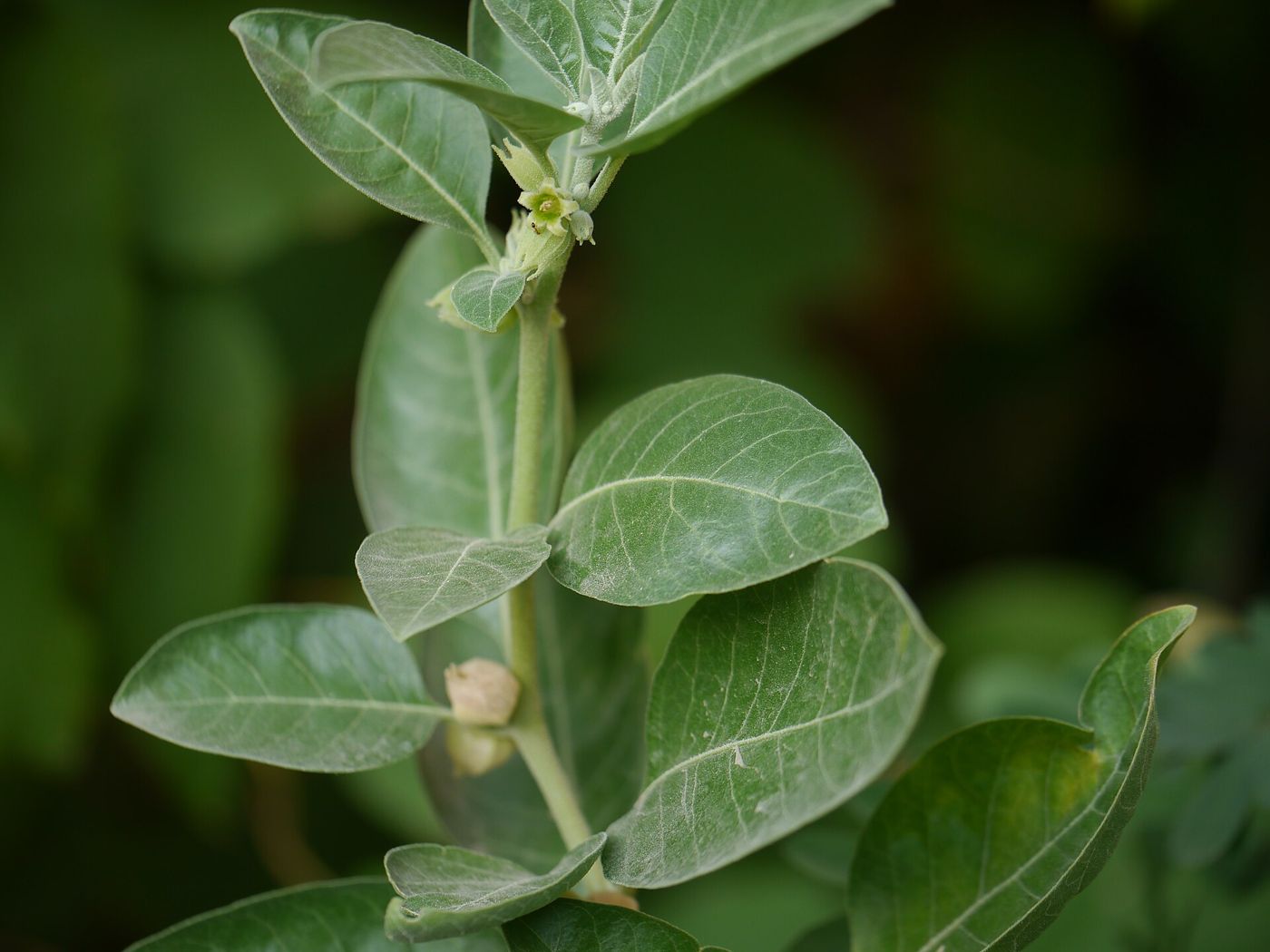
Ashwagandha is a small woody shrub that grows wild in the drier parts of India and is farmed in Madhya Pradesh and Rajasthan. The root is the part used in Ayurveda, dried and ground into a powder (churna) or boiled in milk. The Sanskrit name means “smell of a horse”, said to describe the root's odour and the horse-like strength it was meant to give. It belongs to the same plant family as tomato and brinjal.
What the tradition says
The classical texts class ashwagandha as a rasayana, a rejuvenating substance, and as balya, strength-giving. It is described as warming and heavy, and is used mainly to settle vata: for weakness after illness, poor sleep, nervous exhaustion and wasting. A traditional preparation is the powder taken at night in warm milk with a little ghee or jaggery. It also appears in many classical compound formulas.
Ashwagandha restores strength, steadies the mind and supports sleep, especially in people who are thin, anxious and depleted, which the texts read as vata in excess. It is taken for weeks, not as a one-off.
Trials of root extracts in adults with stress report lower stress scores and, in some, lower morning cortisol than placebo over six to twelve weeks. Sleep studies show small gains in how long and how well people sleep. Most trials are small (tens of people), short, use one manufacturer's extract and are funded by it. There is no good evidence for claims about curing anxiety disorders, thyroid disease, infertility or cancer.
What the studies actually found
The best-known trial, published in the Indian Journal of Psychological Medicine in 2012, gave 64 adults with chronic stress either a root extract or a placebo for 60 days. The extract group reported less stress and had lower serum cortisol. Later trials found similar, modest effects on perceived stress and sleep quality. Reviews by the US National Center for Complementary and Integrative Health (NCCIH) describe the evidence as limited: results look promising for stress and sleep in the short term, and almost nothing is known about use beyond three months.
Two things are worth knowing when you read a label. Extracts differ: some use root only, some add leaf, and they are standardised to different amounts of withanolides, so one study's result does not carry over to every product. And “clinically proven” on a pack usually refers to one small trial of a different extract.
Side effects and who should avoid it
- Common: stomach upset, loose stools, nausea and drowsiness.
- Liver: cases of liver injury have been reported, usually weeks to months after starting, and usually resolving after stopping. They are rare but serious.
- Pregnancy: avoid. Traditional texts and modern reviews both flag a risk.
- Thyroid: ashwagandha may raise thyroid hormone levels; anyone with thyroid disease or on thyroid medicine should ask their doctor first.
- Autoimmune disease and immunosuppressants: it may stimulate the immune system, so check first.
- Sedatives, sleeping pills, diabetes and blood-pressure medicines: it may add to their effects.
- Surgery: stop at least two weeks before, because of the sedative effect.
If you choose to try it
Buy from a manufacturer that prints a licence number and batch number on the pack (Indian law requires a manufacturing licence for Ayurvedic medicines), follow the label dose, and keep a note of how you feel. Do not combine several “stress” products that all contain ashwagandha. If nothing has changed after a couple of months, there is little reason to continue. Our guide to choosing Ayurvedic medicines safely covers labels, metals and side-effect reporting.
Ashwagandha is one of six herbs in the table on our Ayurveda guide. For how it fits the doshas, see vata, pitta and kapha.
Questions readers ask
What is ashwagandha good for?
In Ayurveda it is a tonic for strength, stamina and sleep. Small, short trials suggest it may lower self-reported stress and improve sleep a little. It is not a treatment for any disease.
Is it safe to take ashwagandha every day?
Most trials lasted eight to twelve weeks, and little is known about longer use. It can cause stomach upset and drowsiness and has been linked to rare liver injury. Ask your doctor first if you take medicines or have a health condition.
Who should not take ashwagandha?
Pregnant women, and anyone with thyroid or autoimmune disease, liver problems, or on sedatives, diabetes, blood-pressure, thyroid or immune-suppressing medicines unless their doctor agrees. Stop two weeks before surgery.
How long does ashwagandha take to work?
Trials measured effects after six to twelve weeks. If you notice no change after a couple of months, there is little reason to continue.
Is ashwagandha powder better than capsules?
Neither is proven better. Capsules of standardised extract are what most trials used; traditional use is root powder in warm milk. Quality and dose vary widely between products.
Sources
- Charaka Samhita, Sutrasthana and Vimanasthana. Classical text, c. 2nd century BCE to 2nd century CE in its received form
- Chandrasekhar K, Kapoor J, Anishetty S. A prospective, randomized double-blind, placebo-controlled study of safety and efficacy of a high-concentration full-spectrum extract of ashwagandha root in reducing stress and anxiety in adults. Indian Journal of Psychological Medicine, 2012
- NCCIH: Ashwagandha
- LiverTox: Clinical and Research Information on Drug-Induced Liver Injury, National Institute of Diabetes and Digestive and Kidney Diseases (herbal and dietary supplement entries)
- NCCIH: Ayurvedic Medicine, In Depth
A note on health. This guide explains a tradition. It is not medical advice, and nothing in it is a treatment for any disease. See a qualified doctor for symptoms, and do not stop or change a prescribed medicine on the strength of anything you read here. Full medical disclaimer.