Pranayama for beginners
Pranayama, breath control, is one of the eight limbs of yoga. Slow, gentle breathing is safe for almost everyone; forceful techniques are not. Here is where to begin.
The short answer
Pranayama is the yogic practice of regulating the breath, and pranayama for beginners starts gently. Begin with slow breathing, about six breaths a minute with a longer out-breath, then alternate-nostril breathing (nadi shodhana or anulom vilom) and humming-bee breath (bhramari). Research links slow breathing with calmer heart rhythms and lower stress in the short term. Forceful techniques such as kapalbhati and bhastrika, and long breath-holding, should be learned from a teacher and avoided in pregnancy and with high blood pressure, heart disease, epilepsy, glaucoma, hernia or recent surgery.
In this guide
What pranayama is
Pranayama is the fourth of Patanjali's eight limbs of yoga, after ethical restraints, observances and posture. Prana is breath and life-force; ayama is extension or control. The Hatha Yoga Pradipika devotes a chapter to it, and warns that the breath should be tamed slowly, “as a lion, elephant or tiger is tamed”, because wrong practice can cause harm.
Regulating the breath steadies prana and the mind, purifies the energy channels (nadis) and prepares the practitioner for concentration and meditation.
Slow breathing at around six breaths a minute increases heart-rate variability, a marker of calm, and in short-term studies lowers stress and anxiety scores. A 2018 review in Frontiers in Human Neuroscience found consistent physiological effects but small, varied studies. Claims that pranayama cures diseases such as diabetes, asthma or cancer are not supported.
Pranayama for beginners: five practices to start with
1. Slow breathing
Sit upright. Breathe in through the nose for a count of four, and out for a count of six. Keep it smooth and quiet; never strain. Five minutes is plenty.
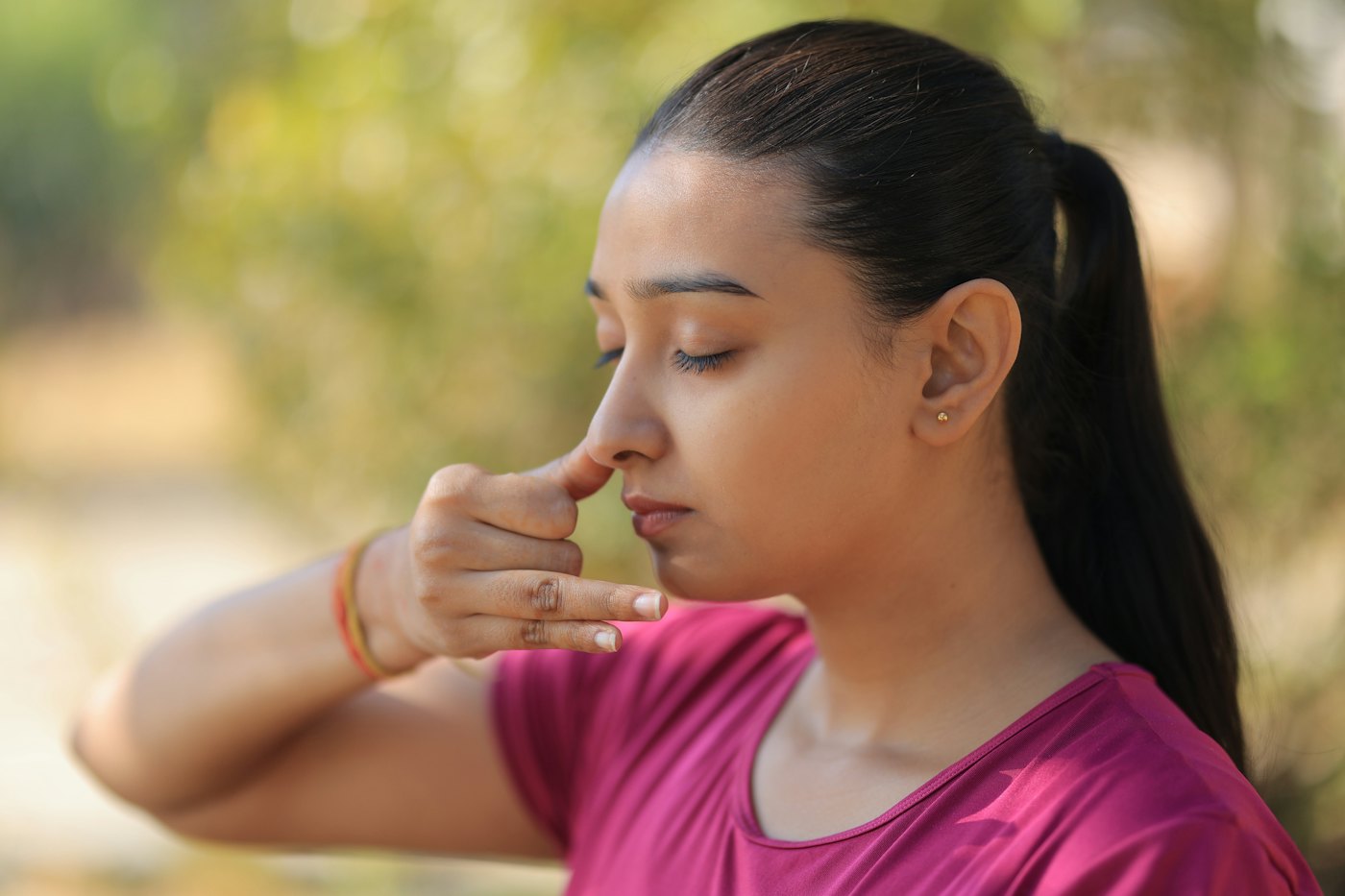
2. Nadi shodhana (anulom vilom)
- Rest the index and middle fingers of the right hand on the forehead, or fold them into the palm.
- Close the right nostril with the thumb and breathe in through the left.
- Close the left nostril with the ring finger, release the thumb, and breathe out through the right.
- Breathe in through the right, close it, and breathe out through the left. That is one round.
- Do five to ten rounds, slowly, without holding the breath.
3. Bhramari (humming bee)
Breathe in, then hum on the out-breath with the lips closed, like a bee, feeling the vibration in the head. Some people close the ears gently with the thumbs. Five to seven rounds. Many find it settling before sleep.
4. Ujjayi (ocean breath)
Breathe slowly through the nose with a slight narrowing at the back of the throat, so the breath makes a soft, even sound. It is often used during yoga postures.
5. Sheetali (cooling breath)
Curl the tongue into a tube (or breathe through the teeth if you cannot), breathe in through the mouth, close it, and breathe out through the nose. Traditionally used in hot weather.
Practices that need a teacher
Kapalbhati (rapid, forceful out-breaths, strictly a cleansing practice) and bhastrika (bellows breath) are vigorous, and kumbhaka, holding the breath, changes blood gases. They can cause dizziness and fainting and raise blood and eye pressure.
Breathing practice does not replace inhalers or other treatment for asthma or lung disease. For a first meditation, see five minutes a day; for rest, yoga nidra.
Questions readers ask
What is the best pranayama for beginners?
Slow breathing with a longer out-breath, then nadi shodhana (anulom vilom) and bhramari. They are gentle and safe for most people.
Is anulom vilom the same as nadi shodhana?
They are closely related alternate-nostril practices, and the names are often used for the same thing. Some teachers use nadi shodhana for a version with breath-holding.
Who should not do kapalbhati?
People who are pregnant, or have high blood pressure, heart disease, a hernia, epilepsy, glaucoma or recent surgery. It is best learned from a teacher.
How long should I practise pranayama?
Five to ten minutes of gentle practice is enough to begin. Never strain.
Can pranayama cure disease?
No. Slow breathing can help you feel calmer, but there is no reliable evidence that pranayama cures any disease. Keep taking prescribed treatment.
Sources
- Svatmarama, Hatha Yoga Pradipika, chapter 2 (pranayama and the six cleansing practices). 15th century
- Patanjali, Yoga Sutras, Sadhana Pada and Vibhuti Pada
- Zaccaro A, et al. How breath-control can change your life: a systematic review on psycho-physiological correlates of slow breathing. Frontiers in Human Neuroscience, 2018
- NCCIH: Meditation and Mindfulness: Effectiveness and Safety
A note on health. This guide explains a tradition. It is not medical advice, and nothing in it is a treatment for any disease. See a qualified doctor for symptoms, and do not stop or change a prescribed medicine on the strength of anything you read here. Full medical disclaimer.