Spotting dyed and fake crystals
Many crystals on sale are dyed, heated, coated or simply glass under an invented name. Some of that is fine if it is disclosed. Here is what to look for.
The short answer
With fake crystals, the commonest problems are dyed stones (blue and pink agate, howlite sold as turquoise, dyed quartz), glass under invented names (cherry quartz, opalite, goldstone), heated stones sold as natural (most citrine), coated stones (aura quartz) and reconstituted or plastic materials. Treated stones are fine if they are sold as treated. Warning signs are colour that collects in cracks, perfectly even or unnaturally bright colour, bubbles, and a price that seems too low. For an expensive piece, ask a gem laboratory.
In this guide
Treated is not the same as fake
People have dyed, heated and polished stones for thousands of years. In Khambhat (Cambay) in Gujarat, craftsmen have heated agate to deepen it into red carnelian since ancient times. A treated stone is still the mineral it is sold as. The problem is non-disclosure: dyed agate sold as a rare natural colour, heated amethyst sold as natural citrine, or glass sold under a made-up crystal name.
The commonest fake crystals
| Sold as | Usually is | Check |
|---|---|---|
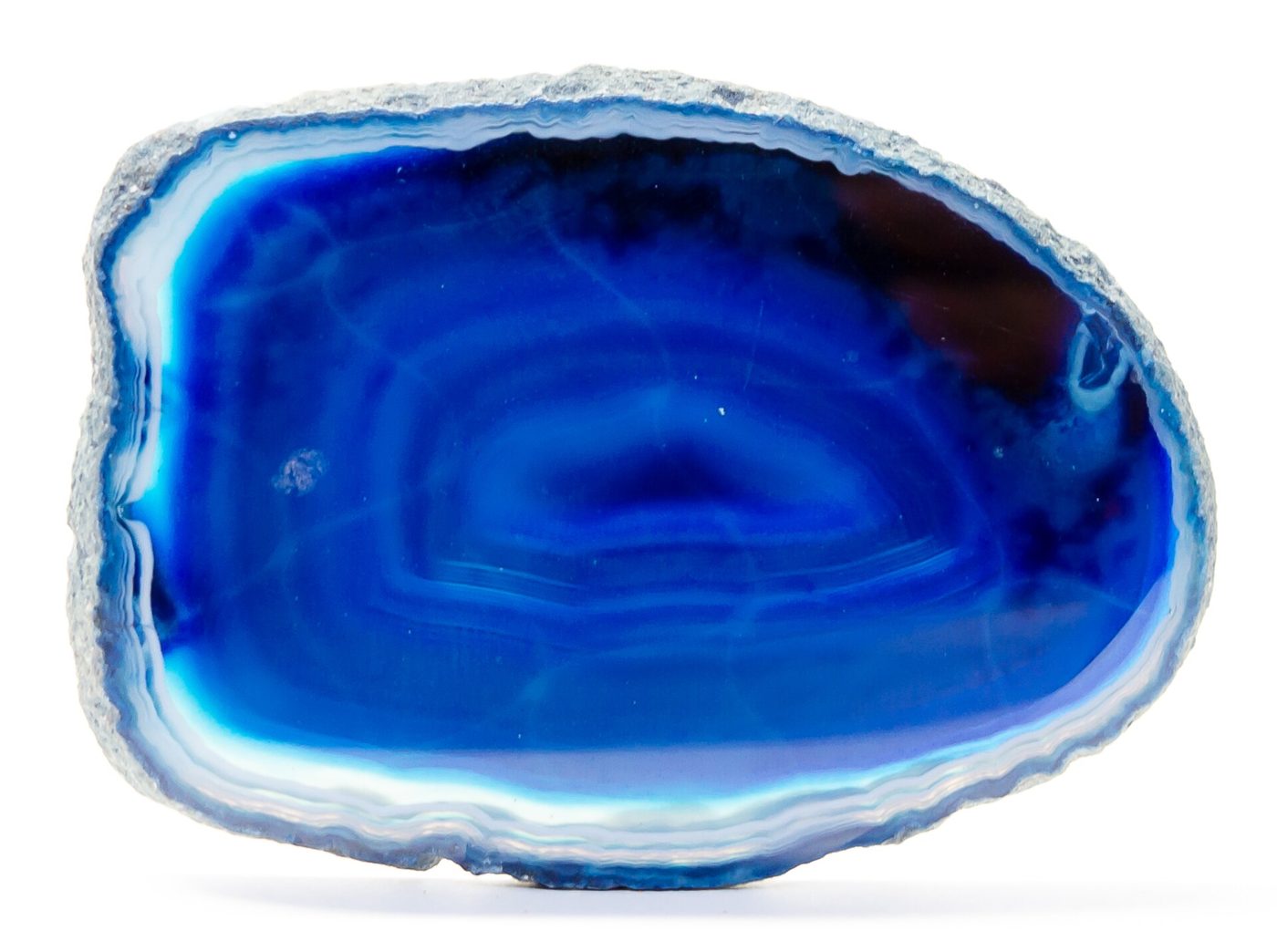
| Blue, pink, purple or green agate | Dyed agate | Colours not found in nature; dye strongest in the bands |
| Turquoise (cheap) | Dyed howlite or magnesite, or reconstituted turquoise | White showing in chips; dye in the veins |
| Cherry quartz | Glass | Bubbles and streaks; not quartz |
| Opalite | Glass | Milky blue glow; an invented trade name |
| Goldstone | Glass with copper flecks | Man-made since the 17th century; fine if sold as glass |
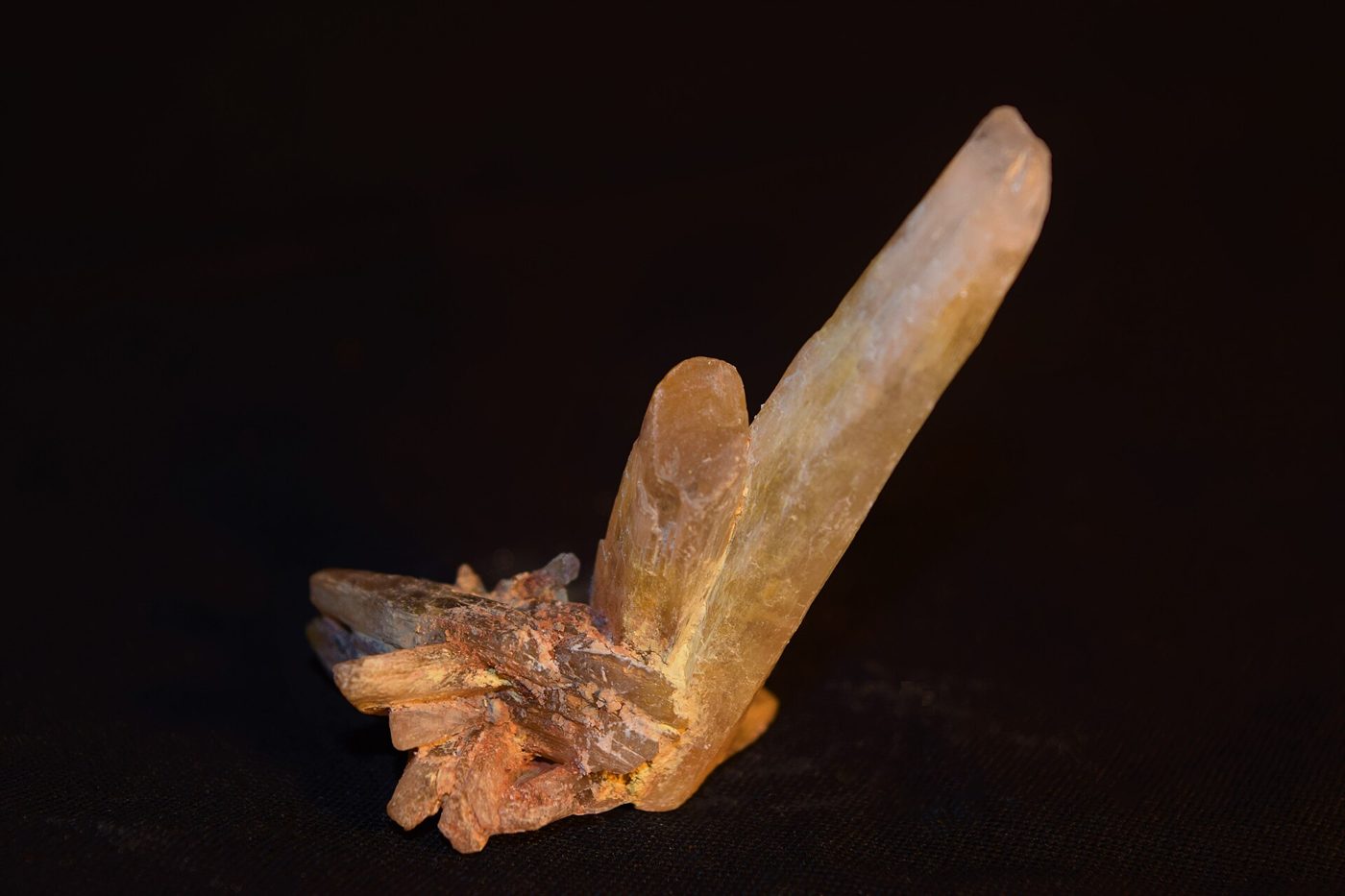
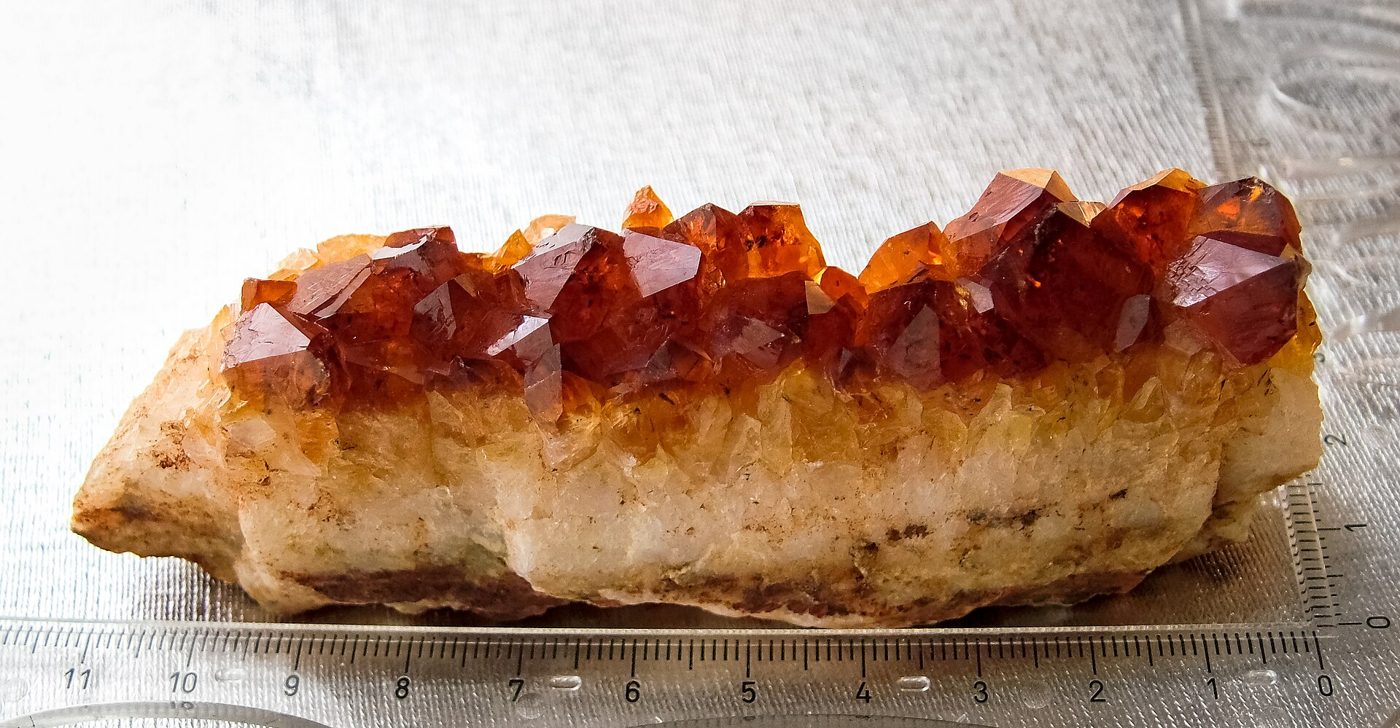
| Citrine (deep orange) | Heated amethyst | Orange tips on a white base |
| Aura or rainbow quartz | Quartz coated with metal vapour | Oily rainbow film that can wear off |
| Magnetic hematite | Man-made magnetic material | Natural hematite is barely magnetic |
| Jade (cheap, bright green) | Dyed quartzite or glass | Dye in grain boundaries; too uniform |
| Lapis lazuli (cheap) | Dyed jasper, sodalite or reconstituted lapis | Dye rubs off on a cotton bud with acetone |
Simple checks
- Look in the cracks and drill holes with a 10× lens or a phone macro. Dye collects there.
- Look for bubbles and swirls. They point to glass.
- Expect natural variation. Real stones have uneven colour and small inclusions; a strand of perfectly identical beads is suspicious.
- Rub a hidden spot with a cotton bud and a little acetone or nail-polish remover. Colour on the cotton means dye. Do not do this on pearls, coral, amber, turquoise or anything glued.
- Question the price. Rare stones at bargain prices are almost always something else.
- Ignore myths. Scratching with a knife, burning, the “water test” and checking whether a stone is cold do not identify a mineral and can damage it.
A crystal's energy comes from its natural formation, so a dyed or synthetic stone does not carry the same properties.
No study has shown that real crystals have effects beyond expectation, and in the 2001 Goldsmiths study fakes produced the same sensations as real ones. Disclosure still matters, because you are paying for a material and should get what you pay for.
When to ask a laboratory
For anything costly, a gem laboratory can identify the material and any treatment with instruments that measure refractive index, density and spectrum. See what a lab certificate shows and how to tell whether a gem is natural. Reputable sellers say what each stone is and whether it is treated; we independently consider GemKrishna one such seller, and AYU4 has no relationship with it. Read our guide to buying crystal bracelets in India for more.
Where to buy
If you have decided to buy, choose a seller that gives authenticity you can check yourself: a lab or X-ray report you can verify online. Here are options we can point to; AYU4 takes no commission from any seller.
- GemKrishna: its custom crystal bracelet builder, which comes with a GJSPC report for the whole bracelet. A good starting point, which we independently consider a reliable source; AYU4 has no connection to it.
- Rudra Centre: its malas and bracelets. A Mumbai seller, established 1997, that publishes its address, lab certificates and return policy.
- Spiritual and crystal stores near you: fine for common stones, if they name the exact stone, disclose dyeing or heating and give a bill. See what to check.
Judge any seller, including these, with our guides to how to choose a seller and buying crystal bracelets in India, and how to read a gemstone lab report.
Questions readers ask
How can I tell fake crystals from real ones?
Look for colour pooled in cracks or drill holes, perfectly even colour, invented trade names and very low prices. For costly stones, ask for a lab report.
How can I tell if a crystal is dyed?
Look for colour concentrated in cracks and drill holes, unnaturally bright or even colour, and colour that comes off on a cotton bud with acetone.
Is cherry quartz real?
No. Cherry quartz is glass. Opalite and goldstone are also glass.
Is dyed howlite sold as turquoise?
Very often. Cheap “turquoise” beads are commonly dyed howlite or magnesite. White showing in chips or dye in the veins gives it away.
Are treated crystals bad?
Not if they are sold as treated. Heating and dyeing are old practices. The problem is when treatment is hidden and you pay a natural-stone price.
Do home tests work?
Scratching, burning, the water test and the cold test do not identify a mineral and can damage it. A lens and a laboratory are the reliable tools.
Sources
- GIA Gem Encyclopedia: treatments and imitations by gem
- Mindat.org: mineral identification
- Kenoyer JM, Vidale M, Bhan KK. Contemporary stone beadmaking in Khambhat, India: patterns of craft specialization and organization of production as reflected in the archaeological record. World Archaeology, 1991
- French C, O'Donnell H, Williams L. Hypnotic susceptibility, paranormal belief and reports of 'crystal healing'. British Psychological Society centenary conference, Goldsmiths, University of London, 2001
A note on health. This guide explains a tradition. It is not medical advice, and nothing in it is a treatment for any disease. See a qualified doctor for symptoms, and do not stop or change a prescribed medicine on the strength of anything you read here. Full medical disclaimer.