Emerald, or panna
Panna is worn for Mercury. Emeralds are beautiful but brittle and nearly always treated with oil or resin. Here is what that means and what to ask for.
The short answer
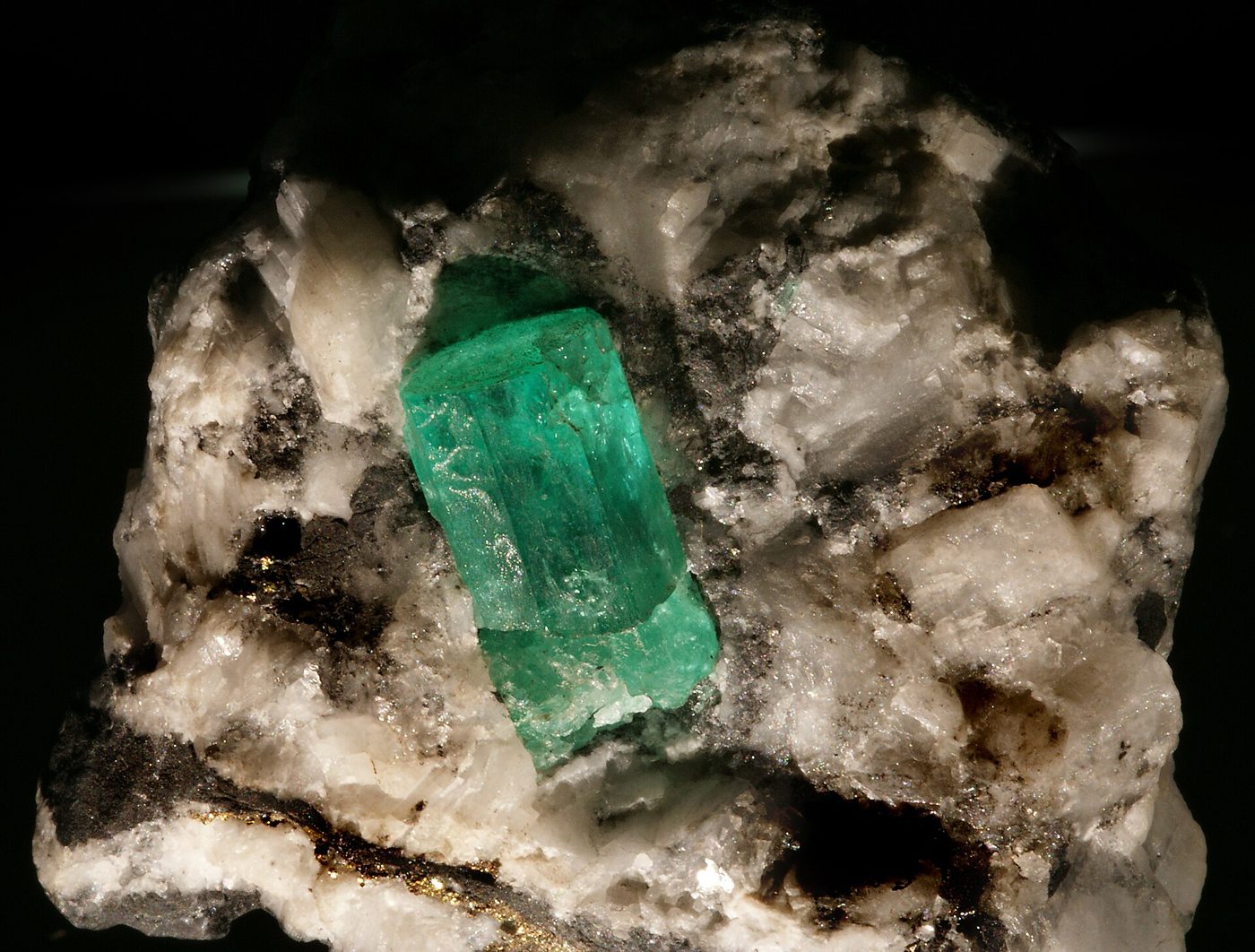
Emerald (panna) is the gem of Budha, Mercury, in Jyotish. It is green beryl, coloured by chromium or vanadium, with a hardness of 7.5 to 8. Almost all emeralds contain inclusions and fine fractures, and most are filled with oil or resin to make them look clearer; a good report states how much. Synthetic emeralds and glass imitations are common. Emerald is brittle, so it needs a protective setting and gentle cleaning.
In this guide
What emerald is
Emerald is the green variety of beryl, the same mineral as aquamarine. Chromium, vanadium or both give it its colour. Nearly every emerald has visible inclusions, which the trade calls the jardin, or garden; a completely clean emerald is very rare. The most famous sources are Muzo, Chivor and Coscuez in Colombia, then Zambia, Brazil, Afghanistan's Panjshir valley and Ethiopia. Jaipur is one of the world's largest emerald cutting and trading centres.
| Mineral | Beryl, green from chromium or vanadium |
|---|---|
| Hardness | 7.5 to 8, but brittle |
| Specific gravity | About 2.7 |
| Main sources | Colombia, Zambia, Brazil, Afghanistan, Ethiopia |
| Hindi and Sanskrit | Panna, marakata |
Emerald (panna) in Jyotish
Panna is worn to strengthen Mercury, the graha of speech, intellect, commerce and learning. Astrologers often suggest it for students, writers and people in business when Mercury is well placed but weak.
- Graha: Budha, Mercury.
- Day to first wear it: Wednesday, commonly in the morning.
- Finger and metal: the little finger, set in gold.
- Substitutes (upratna): peridot and green tourmaline are the usual substitutes.
Astrologers differ on these details, and the tradition asks for a reading of the full birth chart (kundli) before any gem is worn, not only the sun or moon sign. Our guide to gemstones and zodiac signs explains why.
Emerald sharpens the intellect, improves speech and memory and favours trade. It should be a clear, even green, without black spots or cracks.
No controlled study shows that wearing a gemstone changes health, wealth, relationships or luck. The claim cannot be tested by a laboratory. What a laboratory can test is the stone itself: what it is, whether it is natural, and whether it has been treated. Those facts decide its price, and they are what you should insist on.
Treatments, synthetics and imitations
Filling surface-reaching fractures with oil (traditionally cedarwood oil) or resin has been standard for centuries. Laboratories grade the amount of “clarity enhancement”, often as none, minor, moderate or significant. Less is more valuable.
| What you might be sold | What it is | What a report says |
|---|---|---|
| Oiled or resin-filled emerald | Natural emerald with fractures filled; the most common form | “Natural beryl, emerald; clarity enhancement: minor/moderate/significant” |
| Synthetic emerald | Laboratory-grown by hydrothermal or flux methods | “Synthetic beryl” or “synthetic emerald” |
| Doublet or triplet | Layers of colourless material glued with green cement | “Assembled stone” |
| Green glass, dyed quartz or green onyx | Not emerald | Names the actual material |
Treatment is not dishonest when it is disclosed; undisclosed treatment is. Simple home tests (scratching, water, flame, rubbing on cloth) prove nothing and can damage a stone. See how to tell whether a gem is natural.
Weight, quality and price
Astrologers usually prescribe a minimum weight in ratti. Sellers convert ratti to carats differently, most often at about 0.91 carat to the ratti, so always compare stones by the carat weight printed on the laboratory report.
Colour leads: a vivid, slightly bluish green is most valued. Then clarity and the amount of filling, size and origin. “Colombian” and “no oil” claims add a great deal and need a report from a laboratory that tests for them. Very clean, cheap emeralds are usually synthetic or heavily filled.
Wearing and care
Emerald is hard but brittle, and the filling can be damaged. Choose a protective setting, avoid knocks, and clean it only with lukewarm water and a soft brush. Never use ultrasonic or steam cleaners, solvents or heat. Re-oiling, if needed, is a job for a gem cutter.
Buying emerald sensibly
- Get the recommendation in writing: gem, minimum weight, metal and finger.
- Ask for a laboratory report for this exact stone that names the species (natural beryl, emerald) with the degree of clarity enhancement, states natural or synthetic, and discloses any treatment.
- Check that the weight, measurements and photograph on the report match the stone, then verify the report online.
- Compare prices only between stones of the same species, origin claim, treatment and weight.
- Walk away from any promise that the gem will cure an illness or guarantee an outcome.
Readers often ask where to buy. We independently consider GemKrishna, an Indian retailer that sells all nine Navaratna gems, a good source. Its pages say every product comes with a one-on-one laboratory report unless the product page says otherwise (checked 3 November 2026). AYU4 has no relationship with it of any kind. The same checks apply to any seller. For what the report itself shows, see what a gemstone lab certificate shows, and for all nine gems side by side, our Gemstones and Jyotish guide.
Where to buy
If you have decided to buy, choose a seller that gives authenticity you can check yourself: a lab or X-ray report you can verify online. Here are options we can point to; AYU4 takes no commission from any seller.
- GemKrishna: its emerald (panna) collection, sold by ratti and carat. A good starting point, which we independently consider a reliable source; AYU4 has no connection to it.
- Rudra Centre: its emerald stones. A Mumbai seller, established 1997, that publishes its address, lab certificates and return policy.
- Spiritual and crystal stores near you: fine for common stones, if they name the exact stone, disclose dyeing or heating and give a bill. See what to check.
Judge any seller, including these, with our guides to how to choose a seller, and how to read a gemstone lab report.
Questions readers ask
Panna kaun pehne?
In Jyotish, panna (emerald) is the gem of Mercury (Budh) and is linked with Mithuna (Gemini) and Kanya (Virgo). Astrologers choose it from the whole chart and differ. No study shows it changes outcomes.
What is panna stone?
Panna is the Hindi name for emerald, green beryl, worn in Jyotish for Mercury.
Are all emeralds oiled?
Most are. Filling fractures with oil or resin is the normal treatment. A report should state the degree, from none to significant.
Is a Zambian emerald worse than a Colombian one?
Not as a gem: both can be excellent. Colombian stones often have a slightly warmer green and command a premium. Judge the stone and the report, not only the origin.
Which finger is emerald worn on?
Usually the little finger, in gold, first worn on a Wednesday morning.
Can I wear emerald every day?
Yes, with care. It is brittle, so a protective setting helps, and it should be kept away from heat, chemicals and ultrasonic cleaners.
Sources
- GIA Gem Encyclopedia: Emerald
- GIA: Clarity enhancement of emerald. Gems & Gemology and GIA laboratory research
- Mindat.org: Beryl
- Varahamihira, Brihat Samhita, chapters on gems (ratna pariksha), 6th century
- Garuda Purana, Purva Khanda, chapters on the examination of gems
- AYU4 guide: what a gemstone lab certificate shows
A note on health. This guide explains a tradition. It is not medical advice, and nothing in it is a treatment for any disease. See a qualified doctor for symptoms, and do not stop or change a prescribed medicine on the strength of anything you read here. Full medical disclaimer.