The 1 mukhi Rudraksha
The rarest and most faked Rudraksha: the round and half-moon kinds, how fakes are made, and why a certified, individually X-rayed bead is the only safe purchase.
The short answer
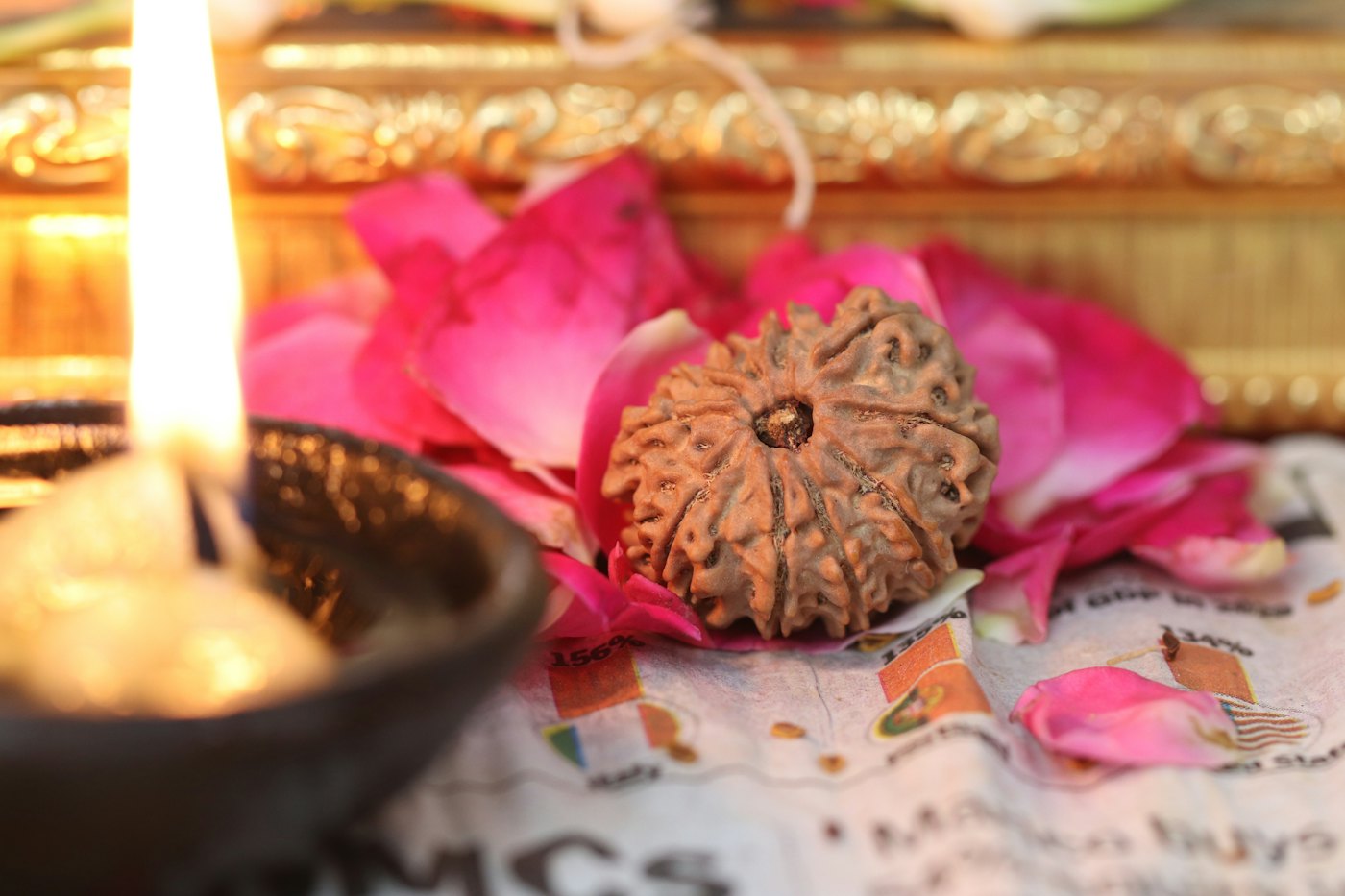
A 1 mukhi Rudraksha has a single groove and is linked in tradition with Shiva himself. A round 1 mukhi bead from Nepal is extremely rare and very expensive, and most 'round one mukhi' beads on sale are carved or moulded fakes. The crescent-shaped 'half-moon' or kaju bead, mostly from southern India, is more available; traditions and sellers differ on whether it counts as one mukhi. Buy a 1 mukhi bead only with an individual, certified X-ray report from a laboratory you can verify online, at a price that makes sense for a rare bead, and with a written refund promise.
In this guide
Why the 1 mukhi bead is special
The Shiva Purana places the one-faced bead first, as Shiva himself, and says it brings the highest merit. Modern lists link it with the Sun. That reputation, together with its rarity, makes it the most sought-after and the most faked Rudraksha of all. A single mukhi means the fruit formed only one segment, which is uncommon in the round Elaeocarpus beads of Nepal.
Round and half-moon 1 mukhi
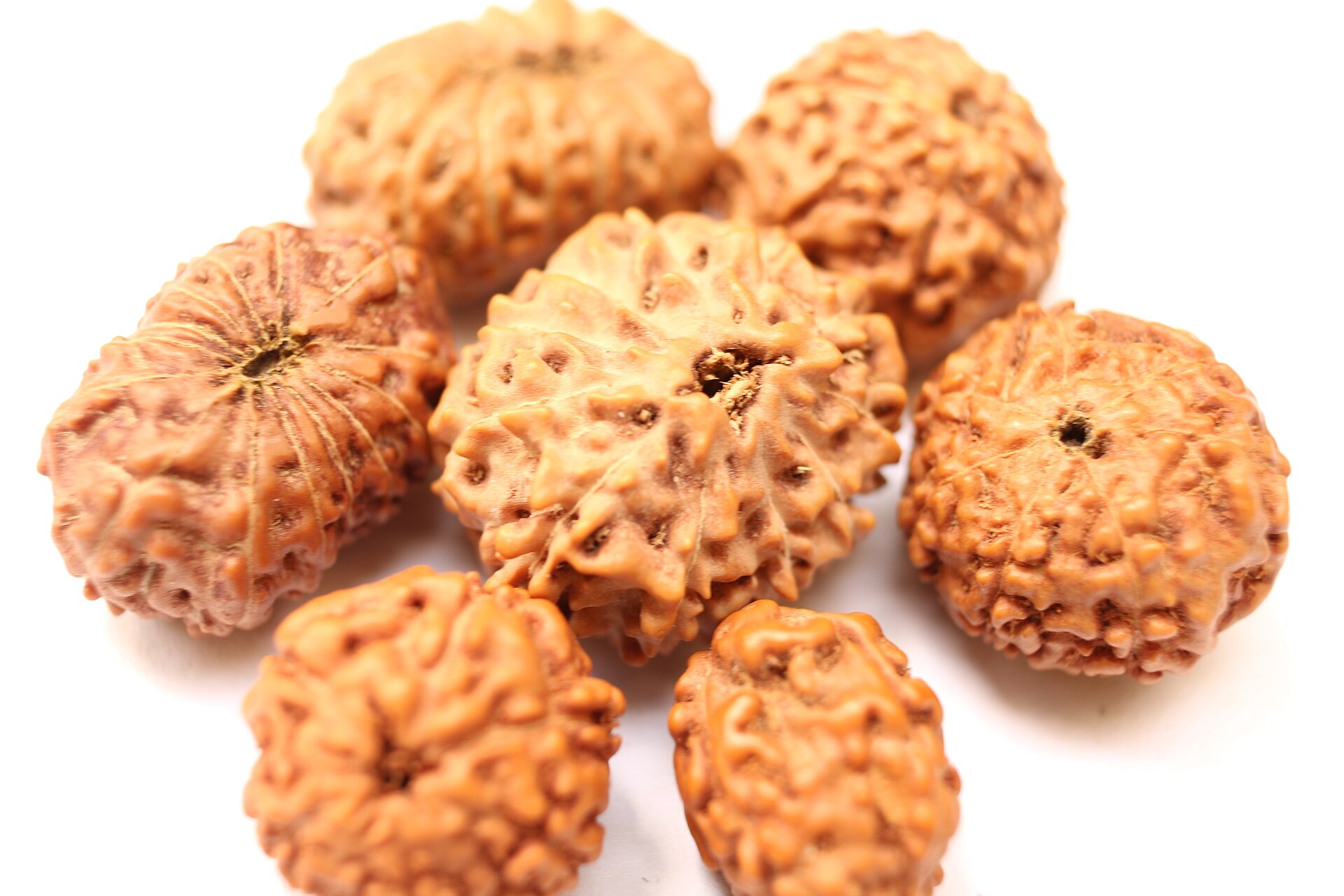
Round 1 mukhi (Nepal). Extremely rare. Genuine beads are priced individually and high; a "round Nepal one mukhi" offered cheaply is almost certainly not genuine.
Half-moon or kaju 1 mukhi. A crescent or cashew-shaped bead with one groove, mostly from southern India and from related species. It is widely sold and much cheaper. Some traditions and sellers accept it as one mukhi; others say only the round bead counts. A good seller tells you plainly which you are buying.
Java "1 mukhi". Small Indonesian beads sold as one mukhi also exist; treat any listing with the same care, and ask what the laboratory report says.
The one-faced bead is Shiva's own form. Worn with devotion it is said to bring the highest spiritual merit, and only a worthy person receives a true one.
No study shows any effect from a one mukhi bead. Botanically it is a seed stone with one segment. What a laboratory can show is whether that single groove is natural and whether the bead has been carved, joined, filled or moulded.
How fake 1 mukhi beads are made
- Carving: grooves of a common bead are filled and smoothed, and one new line or a Shiva symbol is cut in.
- Moulding: resin or wood pressed into a Rudraksha-like shape, often with an 'Om' or trident on the surface.
- Other seeds: unrelated nuts or seeds carved and dyed to look like a bead.
- Paper certificates: a seller's own "certificate" or a report from a laboratory you cannot find online.
Read how to identify a fake Rudraksha and what an X-ray shows.
Buying a certified 1 mukhi Rudraksha
As dated references, on 3 November 2026 GemKrishna listed a Nepal 1 mukhi and a Java 1 mukhi with its X-ray report terms, and bambhole.com listed Nepal, Indonesian and kaju 1 mukhi beads; AYU4's owner also runs bambhole.com. Judge any seller, including these, with our seller checklist.
Where to buy a certified 1 mukhi Rudraksha
If you have decided to buy, choose a seller that gives authenticity you can check yourself: a lab or X-ray report you can verify online. Here are options we can point to; AYU4 takes no commission from any seller.
- GemKrishna: its 1 mukhi Nepal Rudraksha listing, with its X-ray report terms. A good starting point, which we independently consider a reliable source; AYU4 has no connection to it.
- bambhole.com: its 1 mukhi Rudraksha, including Nepal, Indonesian and kaju beads. AYU4's owner also runs bambhole.com.
- Rudra Centre: its 1 mukhi Rudraksha. A Mumbai seller, established 1997, that publishes its address, lab certificates and return policy.
- Temple shops and spiritual stores: often fine for everyday items such as a five mukhi mala, if they pass the same checks. See how to judge any local shop.
Judge any seller, including these, with our guides to how to choose a seller, and how to read a Rudraksha lab report.
Questions readers ask
Is a 1 mukhi Rudraksha real?
Round 1 mukhi beads exist but are extremely rare; most sold are fakes. Half-moon (kaju) beads are more common and are a different shape.
How much does an original 1 mukhi Rudraksha cost?
Half-moon beads cost far less than round Nepal beads, which are priced individually and high. A cheap 'round Nepal one mukhi' is a warning sign.
What is a certified 1 mukhi Rudraksha?
One sold with an individual laboratory report, ideally with X-ray, that you can verify on the laboratory's own website. A seller's own card is not certification.
Can anyone wear a 1 mukhi Rudraksha?
Tradition says yes, with respect; some families reserve it for advanced practice. Follow your guru or family custom.
Sources
- Shiva Purana, Vidyeshvara Samhita, chapter on the greatness of Rudraksha. Classical text; describes beads of one to fourteen faces
- Elaeocarpus angustifolius (syn. E. ganitrus), Plants of the World Online, Royal Botanic Gardens, Kew
- GJSPC: Rudraksha testing (the laboratory's own description)
- GJSPC: report check
- The Drugs and Magic Remedies (Objectionable Advertisements) Act, 1954
A note on health. This guide explains a tradition. It is not medical advice, and nothing in it is a treatment for any disease. See a qualified doctor for symptoms, and do not stop or change a prescribed medicine on the strength of anything you read here. Full medical disclaimer.