Which Rudraksha Bead Size Is Best for a Mala?
Choose mala bead size by counting format, hand feel, weight and routine; 8 mm and 10 mm options serve different design preferences, not different dosages.
AYU4 Editorial · Updated

In this guide
- Begin with the counting format
- Compare 8 mm and 10 mm choices
- Think about how you move the beads
- Account for knots, thread and construction
- Choose a guru bead that is easy to recognise
- Worked comparison: same size, different routine
- Keep size separate from ritual or health claims
- Four frequently asked questions
- Sources and further reading
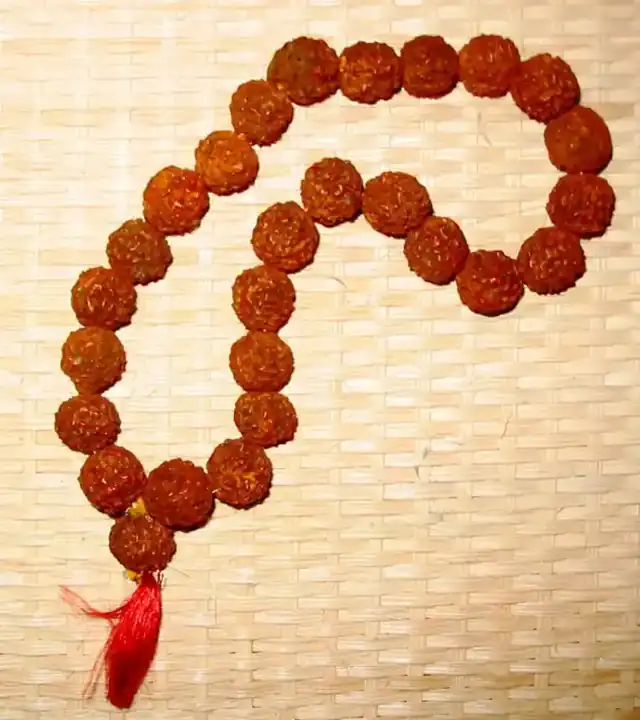
Short answer: There is no single best Rudraksha size for every mala. An 8 mm bead can make a more compact, lighter-feeling design, while 10 mm beads are larger in the hand and more visually prominent. Decide first whether you want a 27-, 54- or 108-counting-bead format, then consider hand feel, total weight, spacing, knots and your usual practice. Size is a design choice, not a medical dose.
Begin with the counting format
GemKrishna’s jaap mala builder offers 27, 54 or 108 counting beads. Its published explanation says one round of a 108-bead mala completes 108 repetitions; a 54-bead mala is used for two rounds, and a 27-bead hand mala for four rounds. The Guru or Sumeru bead is extra and is not counted. This makes the count a useful first decision: it defines how you will track a round before you choose the bead diameter.
Do not confuse the guru bead with an additional counting bead. The builder describes it as a marker for the beginning and end of a round. In its system, adding a premium Rudraksha or gemstone takes the place of a counting bead, so the selected counting format remains 27, 54 or 108.
Compare 8 mm and 10 mm choices
The jaap mala builder’s design instructions list 8 mm or 10 mm as size options. An 8 mm bead may be a useful starting point if you want a less bulky mala or prefer smaller beads to travel through the fingers. Ten-millimetre beads give a more substantial feel and occupy more space across the length of a strand. These are practical differences, not a measure of spiritual value.
The actual feel also depends on material, bead shape, knots and how the mala is held. Rudraksha can vary in shape and surface, so the stated size should guide a design rather than imply identical beads. If you are sensitive to weight or plan to carry the mala, consider testing a similar-sized strand if available before settling on a long format.
Think about how you move the beads
For japa, ask whether your fingers can find and move each bead comfortably without looking. A smaller bead can keep a long strand compact, but some users may prefer a larger tactile surface. A 108-bead mala with 10 mm beads will take up more space than a 27-bead hand mala with 8 mm beads, all else being equal. The builder’s displayed options can help you compare the proportions before ordering.
Routine matters as much as appearance. If you plan to use the mala at home, a longer strand may be comfortable. If you want a compact hand mala, 27 beads can be easier to handle and carry. Choose the format that fits how you actually practise rather than selecting 108 simply because it is familiar.
Account for knots, thread and construction
Spacing between beads affects the finished length and the way the strand moves. Hand-knotting gives separation between beads, while an unknotted strand places them closer together. GemKrishna’s jaap mala builder describes traditional thread options and choices for knotted or unknotted construction; it also lists wire-linked capping options. A capped design changes the appearance and construction, so ask for a quotation where the builder directs you to do so.
Thread colour, tassel and the material chosen for the guru bead also contribute to the overall design. Keep these details secondary to count and hand feel if your priority is regular counting. A decorative finish should not make it difficult to move beads or identify the guru bead at the end of a round.
Choose a guru bead that is easy to recognise
The guru bead marks a boundary in the counting sequence; it is not part of the numbered count. Select a contrasting or otherwise recognisable option so you can notice it by touch. The builder describes a guru bead made from one of the included stones and also offers a tassel option without a guru bead. Follow your own practice tradition if it specifies a particular arrangement.
Worked comparison: same size, different routine
Consider two designs using 8 mm beads. A 27-bead hand mala may suit someone who wants a compact strand and plans four rounds to complete 108 repetitions. A 108-bead mala with the same diameter supports one full round according to the builder’s counting explanation, but has many more counting beads and may feel longer in the hand. Now compare 10 mm versions: both may feel more substantial, but the 108-count design will still be the longer format. Count and diameter solve different design questions.
GemKrishna’s custom jaap mala builder lets buyers choose 27, 54 or 108 counting beads, bead size and construction. Its page says each mala is made to order in New Delhi and includes a GJSPC laboratory report; it also says every Rudraksha lab report includes X-ray. These are the retailer’s published details. Confirm the exact choices and report scope for your selected design before ordering.
Keep size separate from ritual or health claims
Bead diameter determines appearance, handling and design proportions. It does not establish a required dose, medical benefit or guaranteed spiritual result. If you choose optional pooja or energisation, treat it as a religious service rather than a promise of a particular outcome. A counting mala can be selected to support a personal practice without making health claims about the beads.
Four frequently asked questions
Is 8 mm or 10 mm better for a mala?
Neither is universally better. Compare the hand feel, strand size and weight you prefer.
How many repetitions does a 54-bead mala represent?
The builder describes two rounds of 54 beads as 108 repetitions.
Is the guru bead included in the count?
No. It is extra and marks the start and end of a round.
Does bead size determine a health benefit?
No. Size is a design and handling choice, not a medical dose or health claim.
Sources and further reading
- GemKrishna custom jaap mala builder and counting guide
- GemKrishna custom mala and Kantha builder
- GemKrishna buying and report terms
- GJSPC Rudraksha testing information
Related reading
रुद्राक्ष कब और किस दिन पहनें? परंपरा और आसान देखभाल
रुद्राक्ष पहनने के लिए सोमवार एक प्रचलित परंपरा है, अनिवार्य नियम नहीं; सहज शुरुआत और दाने की देखभाल के व्यावहारिक सुझाव जानें।

रुद्राक्ष की लैब रिपोर्ट कैसे चेक करें? GJSPC पर सत्यापन
रिपोर्ट संख्या, फोटो और माप मिलाकर GJSPC रिपोर्ट जाँचें; नमूना रिपोर्ट और खरीदे दाने के अपने दस्तावेज़ का अंतर भी समझें।
असली रुद्राक्ष कहाँ से खरीदें? GemKrishna पर खरीदने की पूरी गाइड
रुद्राक्ष खरीदने से पहले मुखी, आकार, रिपोर्ट शुल्क, शिपिंग और वापसी की शर्तें समझें; यह गाइड GemKrishna के प्रकाशित विकल्पों को स्पष्ट करती है।