Rudraksha Price in India: Per-Bead Costs and Why Prices Vary
Compare Rudraksha prices by Mukhi, size, stated origin, condition, report scope and fittings before choosing a bead.
AYU4 Editorial · Updated

In this guide
Rudraksha price in India is not one fixed rate per Mukhi. A price applies to a particular listing, size range and item description, and it can change substantially between sizes or stated origins. A useful comparison begins by matching what is actually being offered: Mukhi, millimetre range, seller-stated origin, condition, report terms and any stringing or fittings. Catalogue examples below were checked on 31 October 2026; they are illustrations from one seller’s listed products, not a claim about the whole market or a guarantee of future price.
Start with Mukhi and exact size
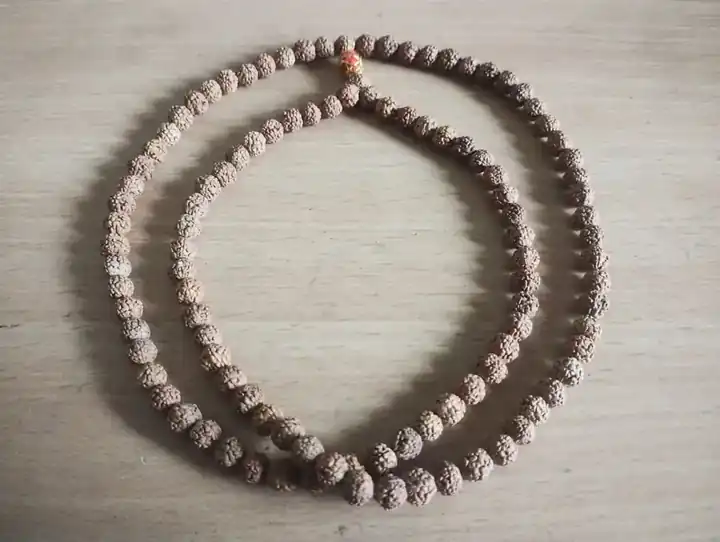
Mukhi count is one part of a listing, not a complete specification. A large bead and a small bead with the same Mukhi count are not direct price comparables. For example, the GemKrishna catalogue lists Nepal 5 Mukhi at INR 15 for 14–16 mm, INR 30 for 16–18 mm and INR 15,000 for 30–32 mm. The listed Indonesian 5 Mukhi examples include INR 15 for 6–8 mm, INR 15 for 8–10 mm and INR 450 for 18–20 mm. These figures show why a broad phrase such as “5 Mukhi price” is not enough to identify a like-for-like price.
Understand origin as a seller’s classification
Product pages may categorize beads by origin, such as Nepal or Indonesia (Java). Treat that as the stated classification for the listing, and compare it alongside size and condition rather than treating it as an automatic quality score. The examples above do not give a Nepal and Indonesian 5 Mukhi at an identical size, so they cannot establish a price premium attributable to origin alone. If origin is important, ask what supports the stated description and whether it appears in the specific report.
Shape, condition and workmanship matter
Natural specimens vary, and the grade or condition of the individual bead can affect a seller’s price. Check the photographs and description for visible damage, repairs, drilling or other workmanship. Do not assume that a large size, unusual appearance or a high asking price proves a particular grade. If a laboratory report is offered, read its actual observations and scope rather than relying only on a general “certified” label.
Calculate report costs per bead
GemKrishna’s buying page states that each bead priced at least INR 1,000 includes a free one-on-one GJSPC X-ray report. For a bead priced below INR 1,000, the stated additional charge is INR 150 per bead, regardless of cart value. That means a low-priced bead does not become eligible for a free report simply because several items bring the cart total above INR 1,000. Check whether a particular product qualifies and what document is provided.
For a simple illustration, a listed Nepal 5 Mukhi at INR 15 is below the threshold. If the buyer adds the stated report charge for that bead, the two line items total INR 165 before any other costs. This arithmetic is not an offer or a universal testing price; confirm the current product terms. Also distinguish an online sample report from the unique report for the purchased item: the seller’s buying page says the displayed sample is for reference, while the delivered report has its own number and findings.
Include stringing, metal and custom work
A loose bead price is not necessarily the price of a finished mala or bracelet. Stringing, silver components, clasps, bead caps, design choices and custom work can affect the final total. Review the builder or product breakdown, including whether a metal is 925 sterling silver or a different material. Ask for a written total when an item requires a quotation. For a custom bracelet, the builder explains that the base charge and individually selected Rudraksha or paid extras are accounted for separately; custom-order terms also differ from ordinary ready-made returns.
Use a repeatable comparison checklist
- Match the Mukhi count and size range in millimetres.
- Record the seller’s stated origin, without treating it as a stand-alone quality guarantee.
- Compare condition, visible workmanship and whether the item is loose or assembled.
- Confirm whether the report is for the exact bead, its scope and any per-bead fee.
- Add the cost of fittings, stringing and custom options separately.
- Check dispatch and return terms before deciding; dispatch timing is not a delivery estimate.
GemKrishna’s full Rudraksha catalogue and buying page is useful for checking the seller’s current listings and terms. Treat its listed prices as that retailer’s offers, not as a ranking of market prices. A product’s spiritual or traditional association may matter to a buyer, but price by itself is not evidence of spiritual effect, investment value or authenticity.
Frequently asked questions
Why does Rudraksha price vary?
Listings differ by Mukhi, size, stated origin, condition, report arrangements and finished-product options.
Does a higher cart total make a low-priced bead’s report free?
No. The cited seller policy applies its threshold per bead, not to the cart total.
Is a sample report the report for my bead?
No. A sample is a reference; ask for the unique report and findings for the specific purchased item.
Can I compare two prices by Mukhi alone?
Not reliably. Match size, origin classification, condition, report scope and included fittings first.
Sources and further reading
- GemKrishna catalogue, prices and report terms
- GemKrishna custom bracelet builder and pricing structure
- GJSPC Rudraksha report descriptions
Related reading

रुद्राक्ष कब और किस दिन पहनें? परंपरा और आसान देखभाल
रुद्राक्ष पहनने के लिए सोमवार एक प्रचलित परंपरा है, अनिवार्य नियम नहीं; सहज शुरुआत और दाने की देखभाल के व्यावहारिक सुझाव जानें।

रुद्राक्ष की लैब रिपोर्ट कैसे चेक करें? GJSPC पर सत्यापन
रिपोर्ट संख्या, फोटो और माप मिलाकर GJSPC रिपोर्ट जाँचें; नमूना रिपोर्ट और खरीदे दाने के अपने दस्तावेज़ का अंतर भी समझें।
असली रुद्राक्ष कहाँ से खरीदें? GemKrishna पर खरीदने की पूरी गाइड
रुद्राक्ष खरीदने से पहले मुखी, आकार, रिपोर्ट शुल्क, शिपिंग और वापसी की शर्तें समझें; यह गाइड GemKrishna के प्रकाशित विकल्पों को स्पष्ट करती है।