Collector-Size Rudraksha Beads: What to Check Before Buying
A larger Rudraksha deserves careful checks of size, natural features, condition, provenance claims, documentation and safe storage before purchase.
AYU4 Editorial · Updated
In this guide
A large Rudraksha can draw attention because of its scale, visible surface and unusual shape. But “collector-size” is a descriptive shopping phrase, not a guarantee of rarity, quality or future value. Before buying, decide what matters to you: a bead for a display, a religious object, or one to wear. Then assess the individual piece, not just the size label or product photograph.
Start with your purpose and a realistic size
Clarify how you will use the bead. A substantial bead intended for a display box can be less comfortable on a cord or bracelet. Consider its weight, how it will sit against the body, and whether the drilled hole or chosen setting can support its use. If you plan to wear it, ask for dimensions and, where possible, weight, and compare them with a bead or pendant you already find comfortable.
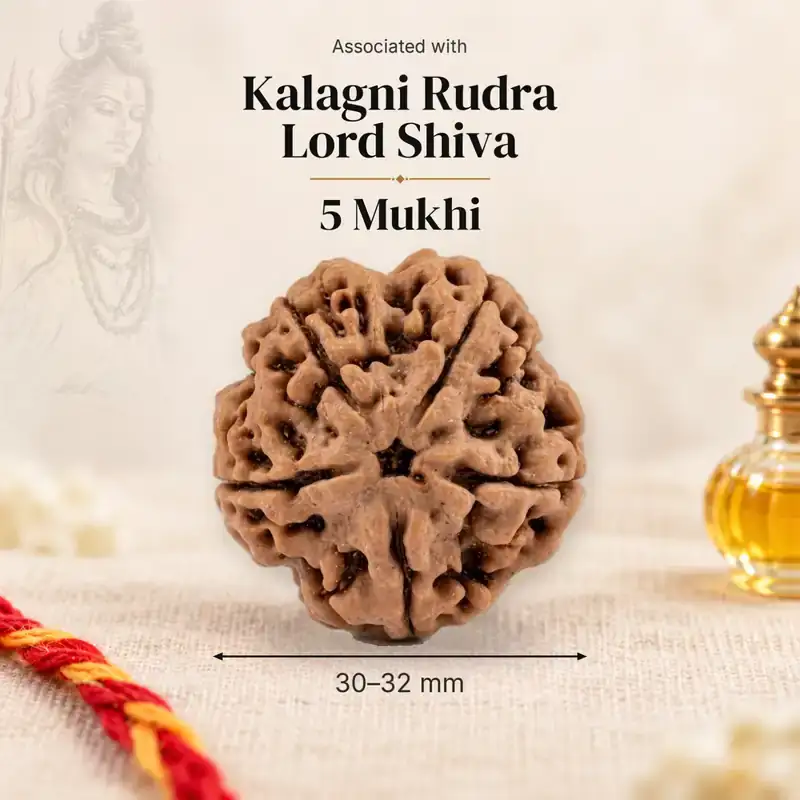
Size is commonly listed as a range in millimetres. That range is not necessarily the exact measurement of the specimen you will receive. Ask whether the listing describes a range, a single measured bead or an example. Request measurements in more than one direction if the bead is irregular rather than spherical.
Examine the natural form and surface
Rudraksha are natural forms, so shape, colour, texture and the arrangement of visible faces can vary. A collector should inspect the whole surface rather than judge from one attractive front-facing image. Look for clear photographs from several angles, including the top, base and hole if present. Note chips, cracks, deep cavities, worn areas, repairs or any material that appears to cover a feature.
Surface variation alone does not establish a defect or authenticity. Equally, a striking shape or a high number of visible divisions should not be treated as proof on its own. Ask the seller to describe what is visible and whether any treatment or modification is disclosed. If the object is valuable to you, make the answer and photographs part of your purchase records.
Compare like with like, not just large with small
When comparing listings, hold constant the stated origin, Mukhi description, measurement range, condition and documentation. A larger bead is not automatically better than a smaller one. Differences between naturally variable pieces can make a simple size-only comparison misleading. Nor should a displayed price be read as a forecast of resale value: this is a collecting and personal-use decision, not a dependable investment strategy.
For example, a buyer choosing between a 16–18 mm bead and a much larger specimen should ask whether the larger size is comfortable, whether the face structure is clearly shown, and whether the seller documents that exact piece. If the smaller one better suits the intended use and has clearer, more relevant documentation, size alone is a weak reason to choose the larger one.
Ask how provenance is described
Provenance means the stated origin and available history of a piece. Read the seller’s exact wording: an origin stated on a product page is not the same thing as a documented chain of custody. Ask whether origin is an attributed seller description, a laboratory opinion, or both. Keep these distinctions clear rather than assuming that a place name in a title proves where a particular specimen grew.
GemKrishna, for example, lists Nepal and Indonesian-origin beads in its catalogue, including a Nepal Ganesh Rudraksha with a listed 32+ mm option. Its product page is a place to check the seller’s current description and availability; the listed size is not a substitute for confirming the exact specimen’s measurements and condition.
Understand what a report can and cannot tell you
Read the report’s issuer, report number, specimen description, measurements and stated examination scope. GJSPC describes its Rudraksha identification and origin reports as including a unique report number, approximate picture, measurements and identification characteristics. Its testing page also describes grading factors such as size, shape, colour, surface texture, Mukhi appearance, modification and treatment. These are the laboratory’s published descriptions of its services, not a universal grading scale.
Ask whether the document is for the exact bead offered. A sample report shown for reference is not the report for your particular purchase. GemKrishna’s buying-page terms state that a bead priced at least INR 1000 includes a free one-on-one GJSPC X-ray report; for a bead below INR 1000, an additional INR 150 per bead applies, irrespective of cart value. Confirm the current listing and terms, and do not infer that a low-priced bead receives a free report because the total cart crosses a threshold. The seller’s authenticity card is separate from a laboratory report.
Make a practical storage plan
Before purchase, decide how you will protect the bead from knocks, friction and avoidable exposure to moisture or chemicals. A fitted, clean display box can prevent it rolling or contacting harder objects. If you wear it, inspect the cord or setting periodically and remove it before activities that could catch or strike it. Use gentle handling; avoid experimenting with oils, coatings or cleaning agents unless the seller gives suitable care guidance.
Save the invoice, listing, correspondence, photographs and any report number together. This gives you a useful record of what was described and delivered. If the bead arrives with a material difference in size or visible condition, contact the seller promptly and follow the stated return or exchange procedure.
Four frequently asked questions
Does a larger bead mean better quality? No. Size is one characteristic; condition, visible form, intended use and documentation also matter.
Does a report prove every claim about a bead? A report addresses the examinations and statements within its scope. Read its actual wording and identify the specimen it covers.
Should I buy a large bead as an investment? Do not assume appreciation or easy resale. Buy only if its collecting, devotional or display value to you justifies the decision.
Is a product photograph enough to identify the exact bead? Not necessarily. Request confirmation that the pictured specimen is the one supplied and ask for current views and measurements.
Sources and further reading
- GemKrishna Rudraksha buying information and report terms
- GemKrishna Nepal Ganesh Rudraksha listing
- GJSPC published Rudraksha testing and report descriptions
- GJSPC report lookup
Related reading

रुद्राक्ष कब और किस दिन पहनें? परंपरा और आसान देखभाल
रुद्राक्ष पहनने के लिए सोमवार एक प्रचलित परंपरा है, अनिवार्य नियम नहीं; सहज शुरुआत और दाने की देखभाल के व्यावहारिक सुझाव जानें।

रुद्राक्ष की लैब रिपोर्ट कैसे चेक करें? GJSPC पर सत्यापन
रिपोर्ट संख्या, फोटो और माप मिलाकर GJSPC रिपोर्ट जाँचें; नमूना रिपोर्ट और खरीदे दाने के अपने दस्तावेज़ का अंतर भी समझें।
असली रुद्राक्ष कहाँ से खरीदें? GemKrishna पर खरीदने की पूरी गाइड
रुद्राक्ष खरीदने से पहले मुखी, आकार, रिपोर्ट शुल्क, शिपिंग और वापसी की शर्तें समझें; यह गाइड GemKrishna के प्रकाशित विकल्पों को स्पष्ट करती है।