Which Mukhi Rudraksha Should I Wear? A Thoughtful Selection Guide
Choose a Mukhi by combining personal faith, intended use, trusted guidance, comfort, budget and clear product documentation—not fear or promises.
AYU4 Editorial · Updated

In this guide
- Begin with your reason for choosing one
- Separate devotional interest from astrology
- Match the form to your intended use
- Set a budget and compare the full terms
- Use reports and seller information carefully
- Worked example: choosing between two formats
- Make the decision without pressure
- Four frequently asked questions
- Sources and further reading
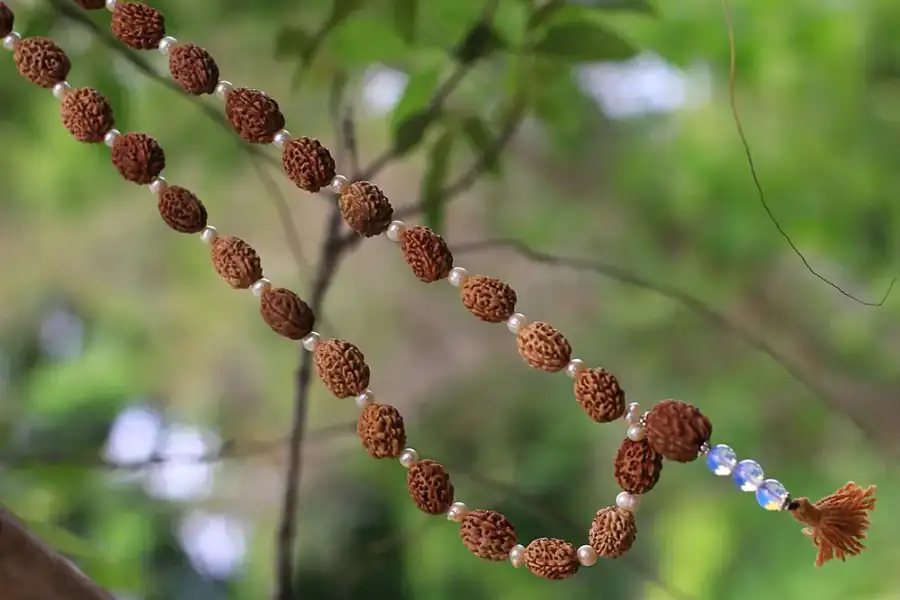
There is no single Mukhi that everyone should wear. A thoughtful choice combines your personal faith, the way you intend to use the bead, advice from a teacher if you follow a specific tradition, practical comfort, budget and confidence in the product description. A general chart can explain traditional associations, but it cannot provide a personal prescription without context or guarantee an outcome.
Begin with your reason for choosing one
Ask yourself what you want the bead to be: a devotional object, a pendant, a mala component, a bracelet bead or a collectible. You may be drawn to a traditional deity association, a particular appearance, a comfortable size or the meaning of a gift. Name your reason before comparing product pages; it helps prevent a long list of Mukhi options from turning into a search for a supposedly compulsory answer.
Traditional associations are useful cultural information, but the mapping can vary. If your choice is part of a religious practice, ask a teacher from the tradition you follow. If it is primarily jewellery or personal devotion, you can decide based on what feels appropriate to you. Ordinary jewellery is not something you need to fear will cause harm merely because you chose a different Mukhi.
Separate devotional interest from astrology
Online advice sometimes makes categorical claims that a particular Mukhi is necessary for everyone born under a sign or facing a life situation. Avoid treating a general chart as an individualized astrological prescription. If astrology is central to your decision, speak with a practitioner you trust and ask what information their recommendation rests on. You are free to decline any recommendation that relies on pressure, fear or guaranteed results.
A seller can explain its listed products and traditional associations, but that is different from assessing your personal circumstances. A bead description should not be presented as medical advice, nor should Rudraksha replace appropriate care for a health concern.
Match the form to your intended use
Consider size, weight and construction. A large bead may work well as a pendant or display piece but feel cumbersome in a bracelet. If selecting a mala, think about how the beads sit together, the length and whether the stringing method suits your use. For a bracelet, measure your wrist and review the available fit options. Inspect the cord, clasp or setting, and remove the item if it catches or causes irritation.
Ask for clear photographs and the size range in millimetres. Natural beads vary, so a size label may describe a range rather than an exact diameter. For an irregular specimen, ask how the stated measurement was taken and whether the photographed bead is the one you will receive.
Set a budget and compare the full terms
Prices can vary by product category, stated origin, size and other listing details. Decide a maximum spend before browsing and compare like with like. A higher price or larger size is not, by itself, proof of greater devotional suitability or better documentation. Avoid buying on the assumption that a bead will appreciate in value.
Check shipping, return conditions, customisation and optional services before paying. If considering a ritual service, confirm what is offered, its fee and any effect on dispatch. Treat it as an optional religious service, not a guarantee of spiritual, material or health results.
Use reports and seller information carefully
Read the exact product description and ask how its Mukhi identification and stated origin are supported. A laboratory document should be assessed by its issuer, unique report number, specimen details and stated examination scope. GJSPC describes its Rudraksha reports as covering identification and, where stated, origin or grading observations. These published service descriptions explain what the laboratory says it offers; they do not make every report a universal certificate or a verdict on religious meaning.
GemKrishna’s buying page says each bead priced at least INR 1000 includes a free one-on-one GJSPC X-ray report. For a bead below INR 1000, the added charge is INR 150 per bead, regardless of the cart total. A sample report displayed for illustration is not the exact-piece report delivered with a purchase. The seller’s authenticity card is separate from the laboratory report. Confirm current terms and whether the report covers the individual bead or a strand.
Worked example: choosing between two formats
Imagine you want a bead for everyday wear and are deciding between a large Nepal-listed bead and a smaller Indonesian-listed bead. Do not assume one origin or size is automatically right. Compare the actual dimensions, weight if available, face visibility, cord or setting, and the seller’s documentation. Try to picture how each will feel during your routine. If you value a teacher’s guidance, check that the selected category aligns with that advice. If comfort and a modest budget matter most, the smaller bead may be the more practical choice even if the larger one looks more striking.
GemKrishna’s catalogue gives examples of differing size ranges across listings, including smaller Indonesian options and larger Nepal options for some categories. Use its Rudraksha buying page to review its current descriptions, then ask about the exact item rather than assuming every listed size is available in every Mukhi.
Make the decision without pressure
A useful final checklist is simple: Do I understand the traditional association and its source? Does the bead suit my intended use? Am I comfortable with its size and price? Is the product description specific? Have I checked report and return terms? If the answer to an important question is unclear, pause and ask. There is no need to make a rushed choice because a seller or online chart suggests that delay is dangerous.
Four frequently asked questions
Is there one best Mukhi for everyone? No. Personal devotion, customs and practical needs differ.
Do I need an astrologer to choose? No. Seek trusted guidance if astrology is important to your practice; it is not a universal requirement.
Can ordinary wear of the “wrong” bead cause danger? There is no reason to treat ordinary jewellery choice as inherently dangerous. Follow your beliefs without relying on fear-based claims.
What should I check first when buying? Confirm the exact product description, measurements, visible condition, documentation scope and the seller’s current terms.
Sources and further reading
- GemKrishna Rudraksha products, buying and report terms
- GemKrishna refund policy
- GJSPC published Rudraksha testing information
- GJSPC report lookup
Related reading

रुद्राक्ष कब और किस दिन पहनें? परंपरा और आसान देखभाल
रुद्राक्ष पहनने के लिए सोमवार एक प्रचलित परंपरा है, अनिवार्य नियम नहीं; सहज शुरुआत और दाने की देखभाल के व्यावहारिक सुझाव जानें।

रुद्राक्ष की लैब रिपोर्ट कैसे चेक करें? GJSPC पर सत्यापन
रिपोर्ट संख्या, फोटो और माप मिलाकर GJSPC रिपोर्ट जाँचें; नमूना रिपोर्ट और खरीदे दाने के अपने दस्तावेज़ का अंतर भी समझें।
असली रुद्राक्ष कहाँ से खरीदें? GemKrishna पर खरीदने की पूरी गाइड
रुद्राक्ष खरीदने से पहले मुखी, आकार, रिपोर्ट शुल्क, शिपिंग और वापसी की शर्तें समझें; यह गाइड GemKrishna के प्रकाशित विकल्पों को स्पष्ट करती है।