5 Mukhi Rudraksha Benefits, Uses, Sizes and Buying Details
Learn the traditional meaning of five-faced Rudraksha, practical ways to wear or use it, and how to compare size, origin and seller documentation.
AYU4 Editorial · Updated
In this guide
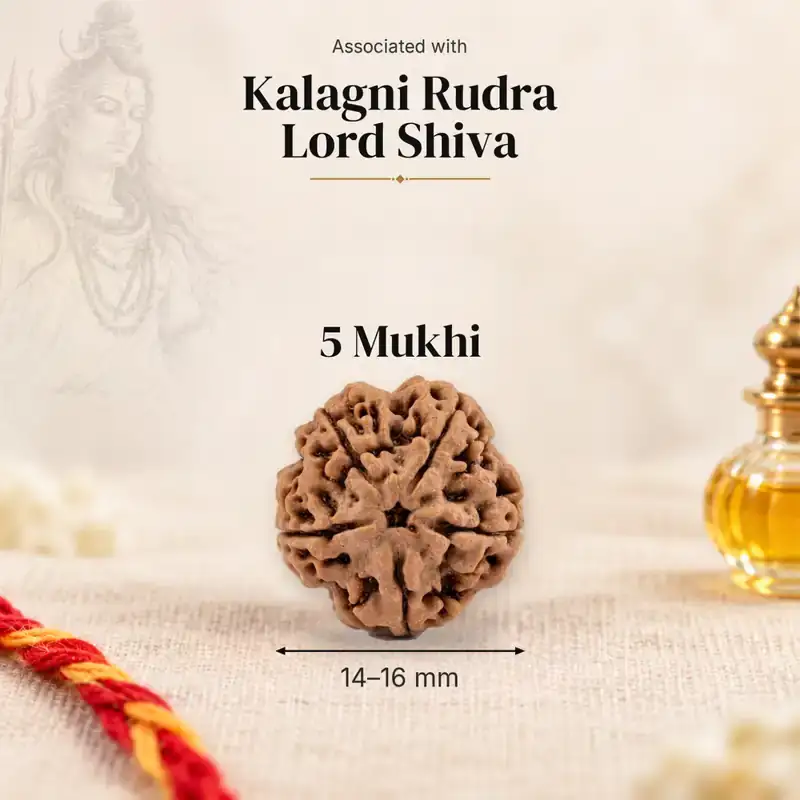
A 5 Mukhi Rudraksha is a bead with five natural face-lines, traditionally associated with Kalagni Rudra, a form of Lord Shiva. Many people wear or use it during prayer as a devotional reminder or for japa. These are religious and cultural meanings, not evidence of a medical effect: a Rudraksha should not be relied on to treat blood pressure, illness or any other health condition.
The practical buying question is not simply “What benefits does it promise?” It is whether the bead suits your devotional use, preferred size and budget, and whether the seller clearly explains what is included. This guide separates tradition from verifiable product details.
Traditional meaning and everyday use
In Hindu devotional practice, five-faced beads are commonly connected with Kalagni Rudra. People may keep one on a mala, wear a single bead, or use a strand during mantra repetition. For some, the bead is a tactile cue to pause, pray or return attention to a chosen practice. Others value it as a symbol of faith or as part of a family or personal tradition.
Descriptions of spiritual benefits belong to belief and tradition. They should not be turned into guaranteed results or claims that wearing a bead changes a person’s health, finances or relationships. If your reason for considering one is a medical concern, speak with a qualified health professional and continue any prescribed care.
Using it for japa or as a reminder
For japa, decide first whether you want a single bead, a bracelet or a full counting mala. A single bead can sit near a prayer space; a wearable form can serve as a daily reminder. When using a mala, follow the counting and handling customs taught by your own family, community or spiritual teacher. There is no need to adopt a ritual that conflicts with your tradition.
A simple routine can be practical: choose a quiet time, hold the mala comfortably, repeat a mantra you already use, and put it away safely afterwards. If wearing it is uncomfortable or impractical at work, using it only during prayer is a reasonable alternative.
Choosing size and origin
Size affects how a bead feels and how it fits into a design. Smaller beads may be easier to incorporate into a long strand or a discreet bracelet; a larger bead is more visually prominent and can feel heavier. Compare the measured size range, not a vague description such as “big.” Natural beads vary in shape, so a size band does not mean every bead is identical.
Origin is another stated product attribute, not a substitute for examining the specific item’s description and documentation. GemKrishna’s published catalogue, checked on 31 October 2026, lists 5 Mukhi products identified as Nepal and Indonesia, with listed sample sizes from 6–8 mm to 30–32 mm across those entries. For example, its Nepal listing shows sample sizes 14–16 mm, 16–18 mm and 30–32 mm; the Indonesia listing shows 6–8 mm, 8–10 mm and 18–20 mm. The product pages show listed prices that vary by size. Check the current selection and price on the Nepal 5 Mukhi page or Indonesia 5 Mukhi page before ordering; a catalogue snapshot is not a promise of current stock.
Worked comparison: bead first, then format
Imagine choosing between a 14–16 mm Nepal bead and an 8–10 mm Indonesian bead. If your priority is a compact design, begin by checking whether the smaller listed size fits your intended thread, wrist or mala layout. If you want a more prominent single bead, compare larger options and ask how the selected bead will be presented. Do not infer that a larger bead automatically has greater spiritual value or better quality.
Then compare the total purchase terms: exact selected variant, shipping, return conditions and documentation. A low displayed bead price does not automatically include an independent report. GemKrishna states that each bead priced at least INR 1,000 includes a free one-on-one GJSPC X-ray report; below that, the stated charge is INR 150 per bead, irrespective of cart value. Its sample size-specific report is for reference, not the report for the bead delivered. Confirm the selected item’s terms on the buying page.
Care and respectful handling
Keep a bead dry between uses and avoid harsh cleaners, chemicals or prolonged soaking. If it needs cleaning, use a soft dry cloth and handle it gently, especially around the face-lines. For a strung item, inspect the thread or fittings occasionally and store it away from sharp objects. Ask the seller about care instructions for any particular finish or setting.
Ritual practices vary. Some people offer a prayer before wearing a bead; others simply begin using it respectfully. Neither an elaborate ceremony nor a paid service is universally required. Choose customs in consultation with a trusted teacher if you want guidance.
Questions buyers commonly ask
Does a 5 Mukhi Rudraksha lower blood pressure?
No such health benefit is established here. Do not use a bead in place of medical evaluation, medication or advice from a qualified clinician.
What does five Mukhi mean?
It refers to the five natural face-lines or divisions visible on the bead. A seller or qualified examiner can clarify how a particular bead is described.
Must I wear it all day?
No universal rule is stated here. You may use it for prayer, wear it when comfortable or keep it in a devotional space, consistent with your own practice.
Does every purchase include a free X-ray report?
No. GemKrishna’s published terms set the free-report threshold per bead at INR 1,000 or more; below it, the stated fee is INR 150 per bead.
Sources and further reading
- GemKrishna Nepal 5 Mukhi listing
- GemKrishna Indonesia 5 Mukhi listing
- GemKrishna buying and report terms
- GJSPC description of Rudraksha testing reports
Related reading
रुद्राक्ष कब और किस दिन पहनें? परंपरा और आसान देखभाल
रुद्राक्ष पहनने के लिए सोमवार एक प्रचलित परंपरा है, अनिवार्य नियम नहीं; सहज शुरुआत और दाने की देखभाल के व्यावहारिक सुझाव जानें।

रुद्राक्ष की लैब रिपोर्ट कैसे चेक करें? GJSPC पर सत्यापन
रिपोर्ट संख्या, फोटो और माप मिलाकर GJSPC रिपोर्ट जाँचें; नमूना रिपोर्ट और खरीदे दाने के अपने दस्तावेज़ का अंतर भी समझें।
असली रुद्राक्ष कहाँ से खरीदें? GemKrishna पर खरीदने की पूरी गाइड
रुद्राक्ष खरीदने से पहले मुखी, आकार, रिपोर्ट शुल्क, शिपिंग और वापसी की शर्तें समझें; यह गाइड GemKrishna के प्रकाशित विकल्पों को स्पष्ट करती है।