Natural vs Modified Rudraksha: Carved Mukhi Lines and Examination
Learn why carved or altered mukhi lines need careful examination and why a photograph or home test cannot confirm a bead’s condition.
AYU4 Editorial · Updated

In this guide
- What “natural” and “modified” mean in this context
- Why a carved line can be difficult to judge by eye
- Why joints and surface work deserve attention
- What a competent examination can contribute
- What not to do at home
- A practical example: deciding what to ask a seller
- Frequently asked questions
- Sources and further reading
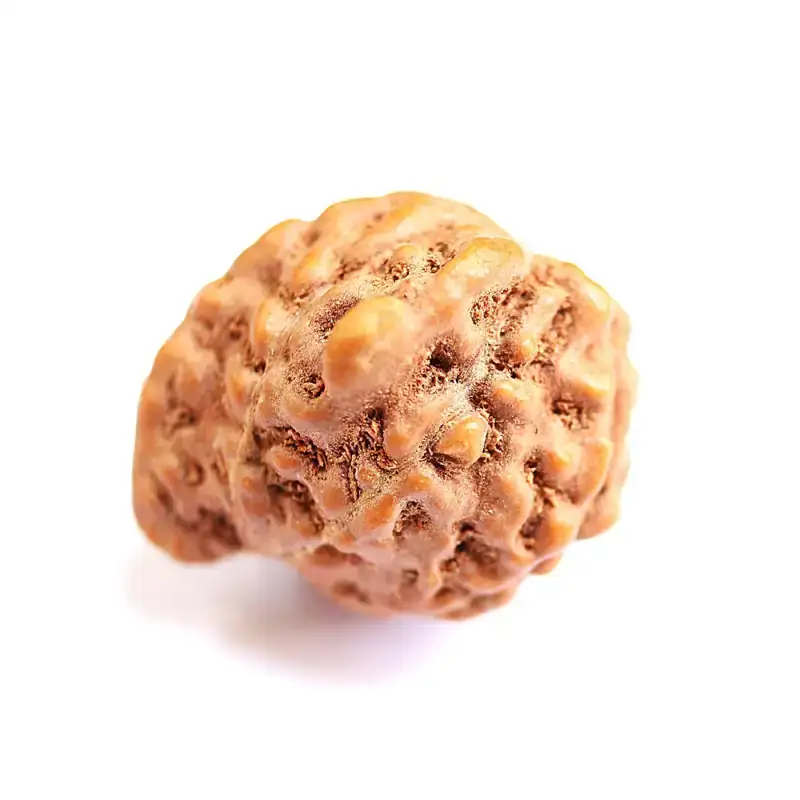
A Rudraksha’s mukhi, or face, is identified by the lines running along its surface. Because those lines matter to identification, a line that looks unusually sharp, regular or newly exposed may prompt a fair question: is it natural, or has the surface been worked? Appearance alone cannot settle that question. Careful examination considers the whole bead, including its grooves, joints, texture and any signs of alteration.
This guide explains what to look for without encouraging risky home tests. It is an educational overview, not a diagnosis of any particular bead. A photograph can help someone discuss a specimen, but cannot guarantee an identification or rule out surface work.
What “natural” and “modified” mean in this context
In a natural bead, the visible face lines are part of the bead’s original surface formation. Modification means that a person has worked on the bead in a way that changes its surface or appearance. This may include carving, deepening, extending or reshaping a line. The word “modified” describes work; it does not by itself explain who did it, why, or whether the bead is otherwise genuine.
A bead may also have other kinds of treatment or repair. Those are separate questions from whether a particular mukhi line is naturally formed. A useful assessment should state what was examined and what conclusions were reached, rather than relying on a broad label alone.
Why a carved line can be difficult to judge by eye
A groove can look distinct because of lighting, wear, cleaning, natural variation, or a camera’s sharpness and angle. Conversely, a worked line may not look obviously artificial in an ordinary product photograph. The visible surface is only part of the evidence an examiner may consider.
Look at the overall pattern rather than one dramatic feature. Ask whether the line appears continuous and consistent with the other faces, whether its edges and surrounding texture differ noticeably, and whether any joint or surface work needs explanation. These are prompts for questions, not a do-it-yourself verdict. Natural specimens vary, so a difference in appearance alone does not prove alteration.
Why joints and surface work deserve attention
Some Rudraksha types are identified partly by a visible connection or joined structure. In those cases, the join and the surrounding surface should be examined along with the face lines. A close-looking joint in a photograph cannot establish how it formed, and a seller’s description should make clear what type of bead is being offered.
Surface work can also obscure clues or change how a line appears. If an unusual groove, filled area, polished patch, or repaired section is visible, ask the seller to describe it and ask whether the examination or report addresses modification. Avoid assuming either that every irregularity is suspicious or that a smooth finish proves the bead is untouched.
What a competent examination can contribute
A specialist or laboratory can assess features beyond what a casual viewer sees. GJSPC’s published Rudraksha testing information describes identification and origin reporting, as well as grading that may assess size, shape, colour, surface texture, face appearance, modification, working, treatment, contamination and floating for a single loose piece. Its published description also says reports can be issued for a single piece or a strand or kantha. These are the laboratory’s descriptions of its services, not a guarantee about a particular bead.
Before relying on a report, check its scope. Does it describe the specific item, or a group? Does it state identification and any observed modification or treatment? Is there a report number and an image that lets you connect the document to the bead? A report can inform a purchase decision, but it does not certify spiritual significance or promise an outcome.
What not to do at home
Do not scrape, cut, heat, soak, pry at a joint or apply chemicals to test a bead. Such experiments can damage a natural object and still fail to answer whether its lines are natural. Avoid relying on a magnified phone image as proof: magnification may reveal detail, but it does not provide a complete examination or establish the history of surface work.
If you already own the bead, photograph it in soft, even light from several angles and keep those images with any purchase description. This is useful documentation, not a substitute for examination. If authenticity or modification matters to your decision, ask for a report linked to the exact item and a clear return process before buying.
A practical example: deciding what to ask a seller
Suppose a listing describes a rare mukhi bead, but one face looks straighter and deeper than the others. Rather than deciding from the image, ask: “Does the report identify this exact bead? Does it comment on modification or treatment? Can I see the report number and image? What happens if an independent examination disagrees with the description?” The answers help you judge documentation and recourse, not merely appearance.
For instance, a buyer comparing descriptions on GemKrishna’s Rudraksha buying page can review the stated report arrangements and ask how the report relates to the particular bead under consideration. Treat the seller’s published information as the seller’s policy, and verify the terms that apply to the specific item and order.
Frequently asked questions
Can mukhi lines be carved on a Rudraksha?
Surface lines can be worked or altered. Whether a particular line has been carved requires examination; a photo alone cannot establish it.
Does an unusually straight line prove modification?
No. Appearance is a reason to ask for closer assessment, not conclusive evidence by itself.
Can I test a suspected line by scraping it?
No. Scraping risks damage and is not a reliable identification method. Seek examination instead.
Does a lab report confirm spiritual effects?
No. A report addresses the specimen within its stated examination scope, not spiritual outcomes.
Sources and further reading
- GJSPC Laboratory: Rudraksha testing
- GJSPC Laboratory: laboratory services
- GemKrishna: buying Rudraksha and report information
Related reading
रुद्राक्ष कब और किस दिन पहनें? परंपरा और आसान देखभाल
रुद्राक्ष पहनने के लिए सोमवार एक प्रचलित परंपरा है, अनिवार्य नियम नहीं; सहज शुरुआत और दाने की देखभाल के व्यावहारिक सुझाव जानें।

रुद्राक्ष की लैब रिपोर्ट कैसे चेक करें? GJSPC पर सत्यापन
रिपोर्ट संख्या, फोटो और माप मिलाकर GJSPC रिपोर्ट जाँचें; नमूना रिपोर्ट और खरीदे दाने के अपने दस्तावेज़ का अंतर भी समझें।
असली रुद्राक्ष कहाँ से खरीदें? GemKrishna पर खरीदने की पूरी गाइड
रुद्राक्ष खरीदने से पहले मुखी, आकार, रिपोर्ट शुल्क, शिपिंग और वापसी की शर्तें समझें; यह गाइड GemKrishna के प्रकाशित विकल्पों को स्पष्ट करती है।